

Key takeaways
- Do not confuse a puppy's purchase or adoption fee with the cost of caring for a dog.
- Build separate budgets for initial supplies, monthly essentials and unexpected care.
- PDSA's published figures use 2024 prices and exclude many optional and unexpected expenses.
- Insurance should be compared by coverage, limits, exclusions, excesses and waiting periods—not price alone.
- Use the first-year calculator with your own quotations; costs vary by size, breed, location and needs.
The three costs every UK puppy owner needs to plan for
A single headline number can be misleading. Start by separating purchases you make once, expenses that recur throughout the year and the potentially large costs that are hard to predict. Every puppy differs in expected adult size, health needs, grooming and household care arrangements.
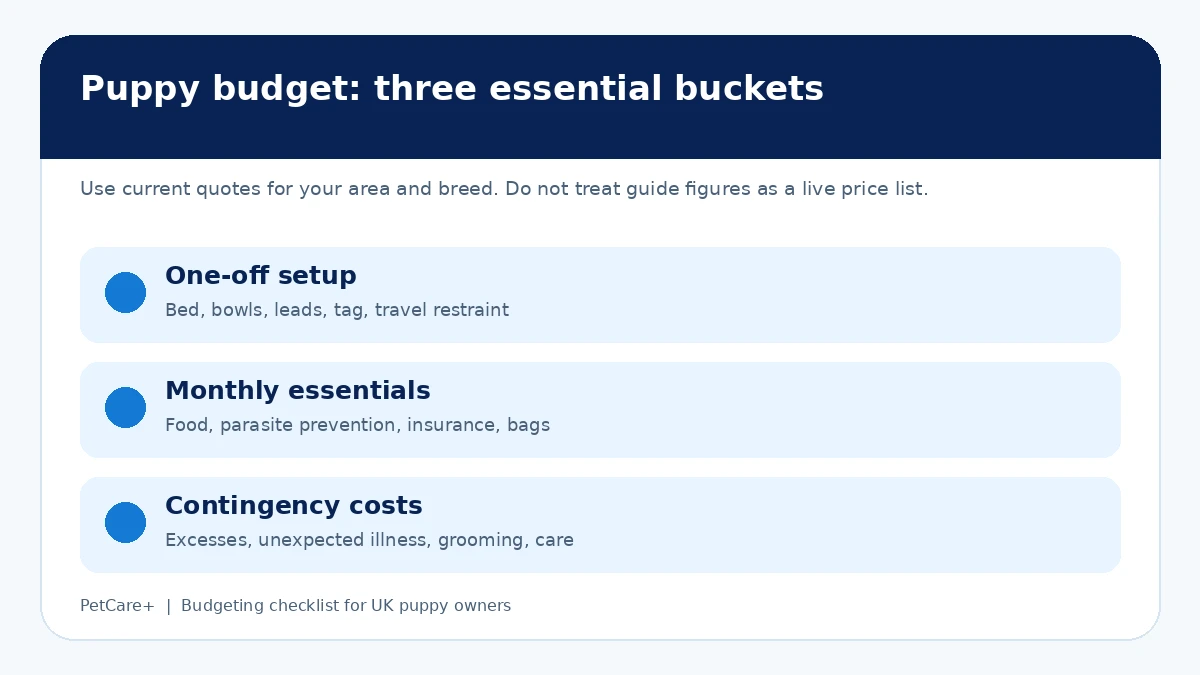
- One-off: adoption or purchase, initial bed, food bowls, collar, tag, leads, travel restraint, basic toys and initial veterinary needs.
- Recurring: complete food, parasite prevention, routine healthcare, insurance premiums, poo bags and replacement supplies.
- Contingency: unexpected veterinary treatment, policy excess, medicine, emergency travel, boarding or a temporary dog walker.
Before buying accessories, use our puppy essentials shopping checklist to distinguish safety basics from optional extras.
What do published UK dog-care estimates actually say?
PDSA publishes estimated minimum lifetime and monthly costs for owning a dog. Its current public dog-cost page says these figures were calculated with prices available in 2024. They are useful for understanding that care is an ongoing financial commitment, but they are not a real-time 2026 supermarket, insurance or veterinary quote.
| Dog size | Monthly basic care | One-off setup (excluding dog purchase) | Minimum lifetime estimate |
|---|---|---|---|
| Small | £69 | £415 | £6,200–£12,000 |
| Medium | £83 | £531 | £9,000–£14,000 |
| Large | £116 | £560 | £8,200–£18,800 |
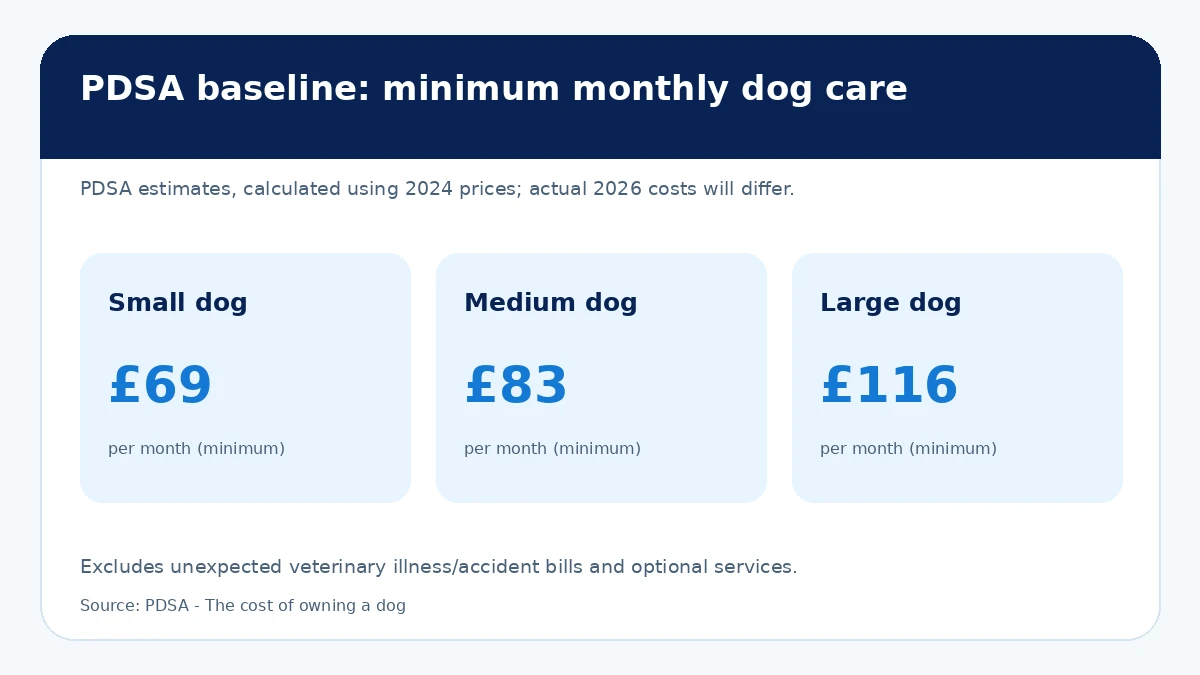
PDSA's cost calculation includes a basic list of routine essentials. It excludes unpredictable illness or accident costs, the price of buying a dog and some services that individual owners may need. Read the original methodology before comparing the estimates with your own budget.
Source: PDSA — The cost of owning a dog.
Calculate your own puppy's first-year costs
Enter actual local prices, not national averages. The calculator adds your upfront expense to 12 months of recurring costs and any amount you choose to set aside for contingency. It is a planning tool, not an insurance quotation or prediction of veterinary bills.
Interactive UK puppy cost calculator
Enter your own quotes in pounds. Blank inputs count as £0. No prices are retrieved or stored.
Your estimated first year
£0
- Initial
- £0
- 12 months recurring
- £0
- Contingency
- £0
Illustrative planning only. Vet treatment, insurance, breed and local prices vary. This total is not a financial or veterinary quotation.
One-off spending: what to price before collection day
Costs rise if you buy items twice because they are a poor fit or if you choose premium products that do not help your puppy. Get a well-fitting travel restraint, bedding, food and water bowls, suitable ID equipment and a few safe toys first. Some rescues supply starter items, while a responsible breeder may send a blanket or some food.
| Category | What to ask | Potential variable |
|---|---|---|
| Acquisition | What does the rescue/adoption/purchase include? | Vaccines, microchip, food or health checks |
| Bedding and crate | What size is safe now and later? | Replacement as the puppy grows |
| Collar, lead, ID and car restraint | Does it fit securely and comply with applicable rules? | Adult-size replacements |
| First veterinary care | Which visits and preventive treatments are needed? | Practice fee and vaccine product |
Ongoing monthly costs that are easy to underestimate
Food, parasite prevention and insurance often account for a substantial part of the routine budget. Additional recurring expenses can include grooming for longer coats, replacing chews, training, daycare and dog walking. Ask your veterinary practice for preventive care costs and ask insurers for actual policy quotes based on your breed and circumstances.
- Compare insurance policies on coverage and renewal terms, not only a monthly premium.
- Use food-pack feeding guides and expected adult size to estimate ongoing consumption.
- Keep a reserve for policy excesses, excluded conditions and emergency transport.
- Budget for replacement collars, bedding and toys as the puppy grows and wears items out.
- Consider household time: paid daycare or walkers may become essential when work patterns change.
Read our puppy feeding schedule guide before estimating daily food quantity.
How to keep costs manageable without cutting essential care
Start with accurate quotes
Ask your own vet, insurer and retailers for prices tailored to your dog and postcode. Avoid treating averages as a promise.
Prioritise welfare basics
Do not skip suitable food, identification, appropriate preventive care or safe transport to save money.
Build a monthly reserve
Choose an amount you can consistently put aside for unexpected expenses, alongside any insurance cover.
Avoid duplicate purchases
Choose suitable sizing and washable materials; borrow or source gently used non-safety items where hygienic and appropriate.
Review quarterly
Update the budget after growth stages, policy renewals, changed medication or new care arrangements.
What to do once you've built the budget
Save your first-year estimate, collect actual receipts, review annual insurance changes and plan vet visits in advance. A record of what you paid is more helpful than relying on national estimates year after year.
Return to the new puppy checklist UK hub for the full home, health and training plan, or explore the UK vaccination guide so you can ask your practice for a specific treatment quotation.
Authoritative sources
Medical, regulatory and safety statements were checked against the following UK sources on 2026-10-17. Recheck changing regulations, travel rules, vaccination guidance and AI standards at least every 90 days or before a related decision.
Frequently asked questions
How much does a puppy cost per month in the UK?
There is no single current price. PDSA's published historical minimum estimates calculated using 2024 prices were £69, £83 and £116 per month for small, medium and large dogs respectively, excluding some expenses and unexpected veterinary illness costs. Get current local quotes for your dog.
Does a pet insurance premium cover everything?
No. Policies vary by limits, excesses, exclusions, waiting periods, and conditions. Read the wording carefully, get tailored quotations and maintain an additional contingency plan.
What are the biggest first-year puppy expenses?
They often include acquiring the puppy, safe setup equipment, vaccinations and veterinary care, food, insurance, parasite prevention and any paid training, grooming or daycare. Actual costs vary greatly.
How do I calculate the first-year total?
Add all one-off expenses, then add twelve months of expected recurring spending plus your chosen contingency reserve. Use current quotes rather than old national averages.