
Key takeaways
- Prepare for food, sleep, safe transport, supervised play and regular toilet breaks before spending on extras.
- Ask the breeder or rescue for food details, health records, microchip registration and any vaccine certificates.
- All UK dogs must be microchipped and registered by eight weeks of age; check the keeper details are correct.
- Do not assume puppies can use public dog areas before vaccination protection; ask your own vet about safe socialisation.
- Create a realistic monthly budget and keep separate money or suitable cover for unexpected care.
- Use a simple routine and documented veterinary dates rather than trying to memorise the whole first year.
Before you bring a puppy home: the decision checklist
A puppy needs care every single day, not just a collection of cute accessories. Think about the adult size, energy, grooming, temperament, exercise and likely health needs of the breed or crossbreed you are considering. Everyone in the household needs to agree on routines and responsibilities before collection day.
- Check the dog's adult needs against your home, working hours and travel plans.
- Discuss which adult is responsible for feeding, training, night waking and vet visits.
- Research a responsible breeder or rescue; ask to meet the puppy and see records.
- Register with a local veterinary practice and save an out-of-hours emergency number.
- Price the first year, not only the adoption fee or purchase price.
- Check that gardens, doors, gates and boundary fencing are secure.
The PDSA new puppy checklist is a useful independent starting point for welfare, lifestyle and supply planning.
Printable new puppy essentials: buy before collection day
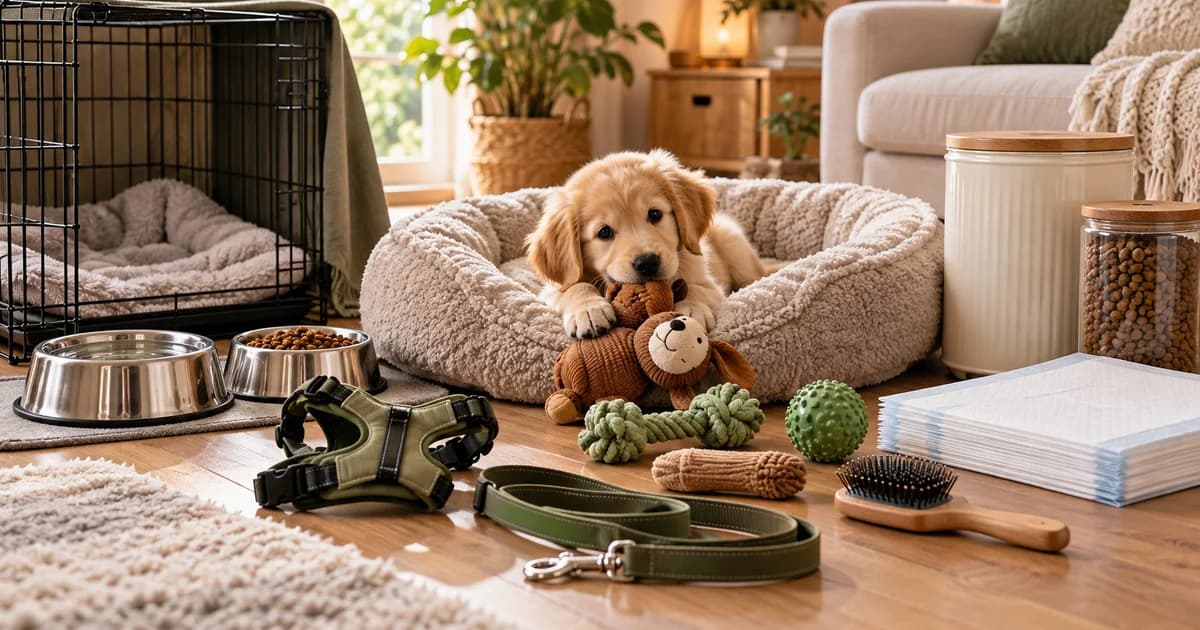
Start with the everyday items that make a home safe and predictable. You can wait to buy expensive extras until you know the puppy's size, chewing habits and preferences. Where possible, ask the breeder or rescue for the brand and portion of food the puppy has been eating.
Free printable checklist
Your new puppy essentials
Tick items as you prepare. Your progress is temporary until you print or save a copy.
Before collection
Day-one supplies
First-week care
PetCare+ educational checklist. Always confirm medical dates and product suitability with your veterinary team.
| Bring-home essential | Why you need it | Nice to have later |
|---|---|---|
| Bed or suitable crate and washable blanket | A quiet, comfortable resting place | Second bed for another room |
| Two safe bowls and complete puppy food | Water access and a consistent initial diet | Slow feeder or puzzle feeder |
| Adjustable collar with legal ID tag, lead and suitable harness | Identification, gradual lead training and supervision | Extra styles or colours |
| Travel restraint, poo bags and cleaning supplies | Safe collection journey and accident management | Travel organiser |
| Varied puppy-safe toys and chew options | Redirect mouthing and provide enrichment | Expensive toy bundles |
Use our UK puppy shopping guide for sizing, safety checks, things you can postpone and links to the PetCare+ partner shop.
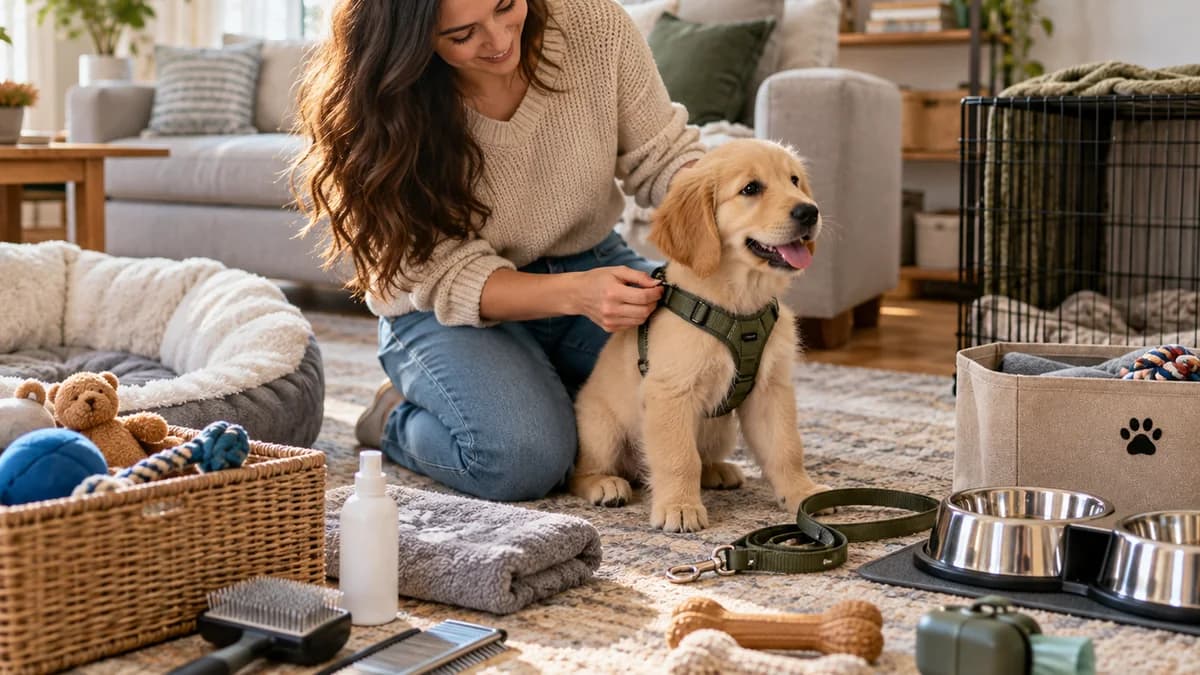
Puppy-proof your house and garden
Walk around the rooms your puppy will use at nose height. Remove access to medicines, cleaning chemicals, cables, batteries, small objects, human foods and unsafe plants. Secure bins and make sure doors and garden fences cannot be squeezed through. Baby gates can help create a manageable, supervised zone.
Choose one quiet base
Set up a cosy bed or positively introduced crate away from constant household traffic. Place water nearby and leave room for the puppy to move and rest.
Create a safe toilet route
Know which door you will use for toilet breaks. Keep a lead, treats and cleaning supplies where adults can reach them quickly.
Separate rest from play
Make a space where children and visitors understand the puppy should not be disturbed while sleeping or eating.
Secure the outdoors
Check fencing, gates, toxic garden substances and sharp tools. Supervise garden time and ask your vet about infection risks if other dogs use the area.
Collection day: documents, journey and a gentle arrival
Collect your puppy when someone can remain at home for the next few days. Ask for written details of the current diet and amounts, feeding times, previous parasite treatments, vaccine dates, microchip number and the breeder or rescue contact. If anything important is missing, make a note to discuss it promptly with your vet.
- Use a secure, well-fitted travel crate or approved car restraint; do not allow the puppy to roam loose in the vehicle.
- A familiar-smelling blanket from the original home may help the puppy settle.
- On arrival, show the puppy their toilet spot, then their safe resting area; limit visitors.
- Offer the same puppy food initially and allow breaks from play for sleep.
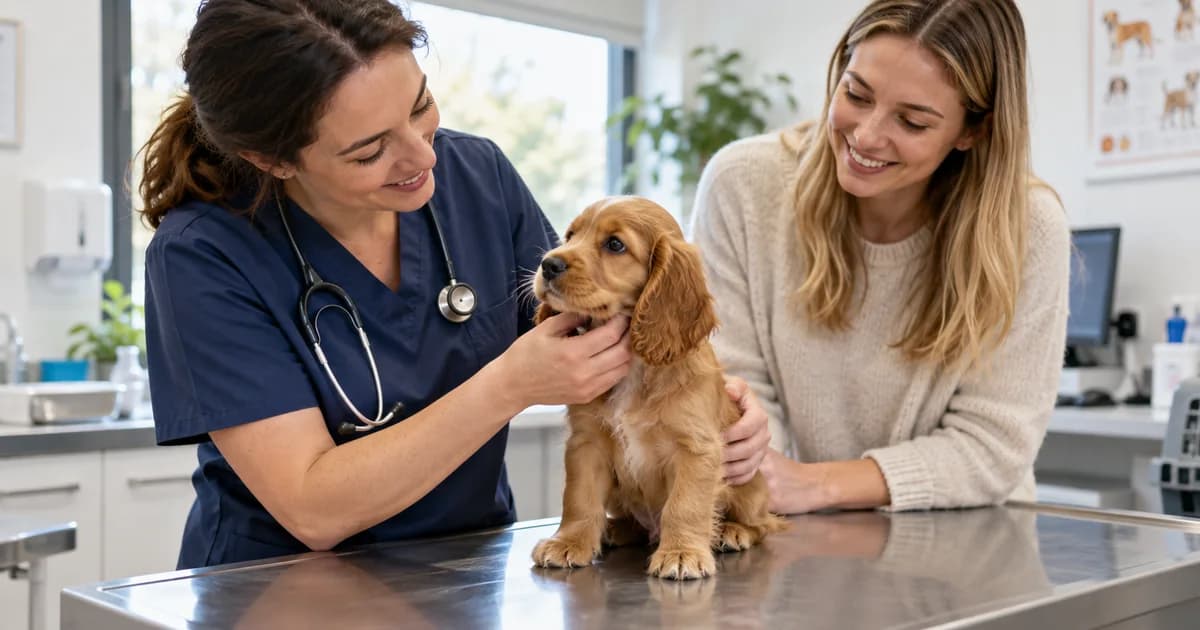
- Book a veterinary health check and confirm all healthcare dates using original records.
Blue Cross has a practical bringing your puppy home guide covering journeys, familiar smells and gentle settling-in.

Your puppy's first week: sleep, toilet trips and short training
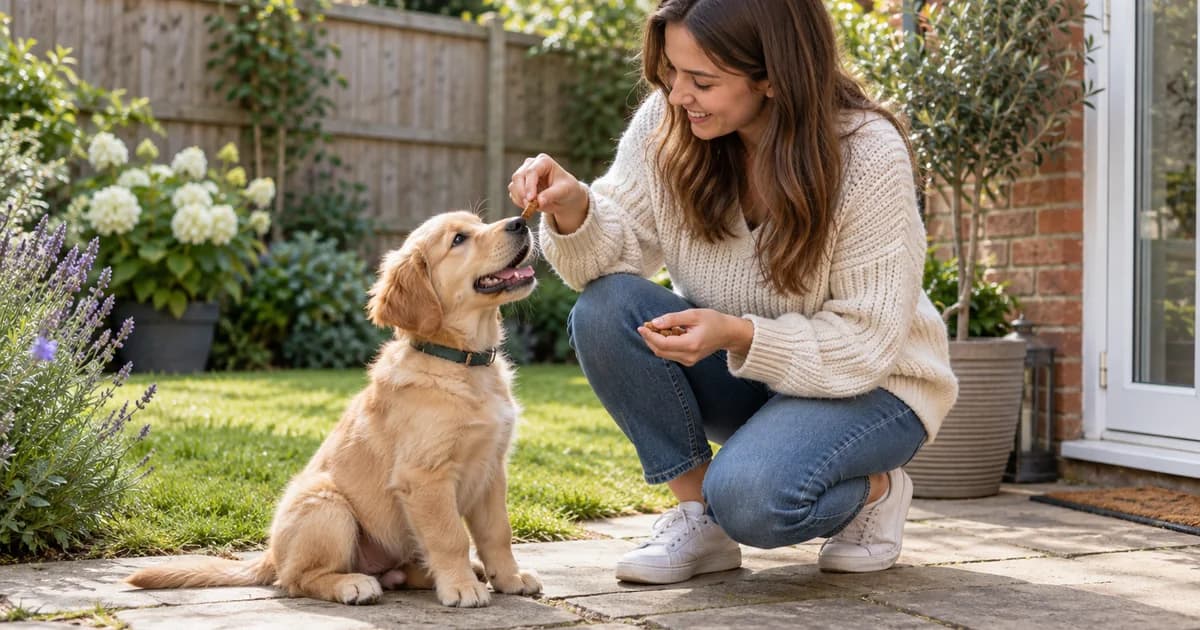
Puppies will not arrive knowing your timetable. A repeatable rhythm is more valuable than trying to impose a rigid hourly schedule. Offer the toilet area after waking, meals and play; reward successes immediately. Keep early training sessions brief and positive, and allow plenty of undisturbed rest.
Wake and toilet
Go straight to the designated safe toilet area and praise the behaviour you want as soon as it happens.
Meal and water
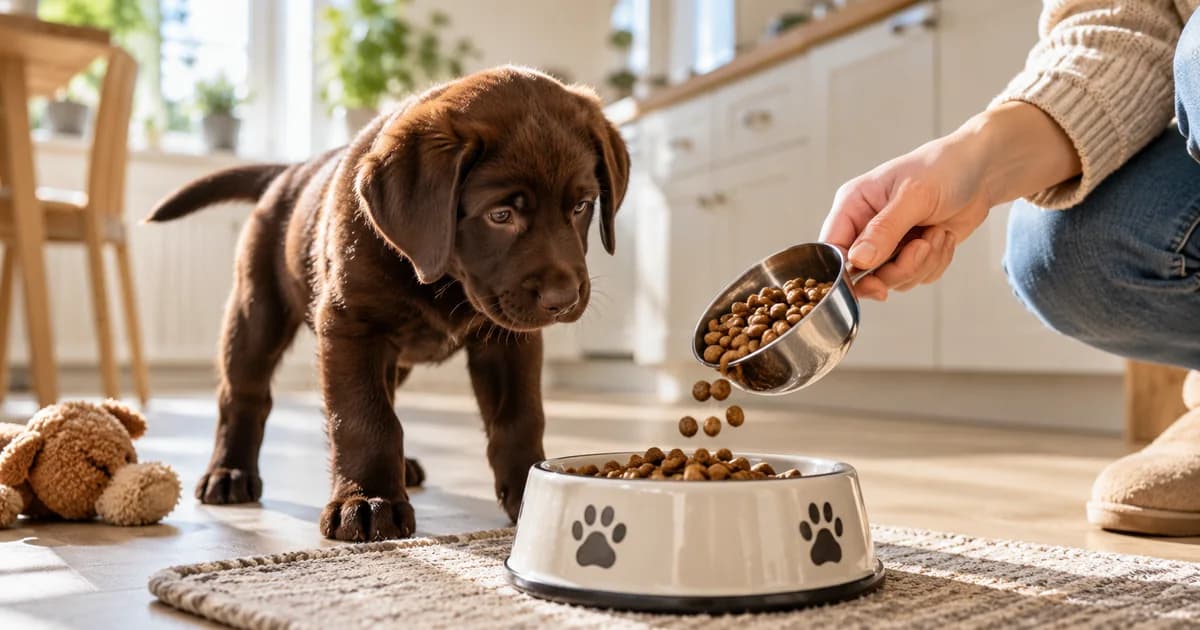
Use the breeder's or vet's feeding instructions and keep fresh water available. A young puppy usually needs several small meals.
Short play or training
Practise name recognition, gentle handling and simple reward-based cues for a few minutes. Finish while the puppy is still relaxed.
Rest and another toilet trip
Let the puppy sleep in its safe space. Repeat the toilet opportunity after each nap, then keep the evening calm.
Need a night-time plan? Read the first-night guide. For accidents and timings, see how to toilet train your puppy.
Feeding a puppy through the first year
A complete puppy food suitable for your dog's expected adult size is the usual starting point. Follow the packet for daily grams, then ask your veterinary team to adjust for breed, growth, weight and body condition. Measure portions rather than guessing and keep any diet changes gradual.
| Approximate age | Meals per day | Important detail |
|---|---|---|
| 8–16 weeks | Often 4 | Small, regularly spaced meals |
| 16 weeks–6 months | Often 3 | Check food packet and growth with your vet |
| From about 6 months | Often 2 | Individual needs vary by breed and health |
Our dedicated puppy feeding schedule by age explains portions, changes of food and what to track.
Vet checks, vaccinations, microchip and UK essentials
A puppy's exact vaccine plan depends on the product used, previous vaccinations and veterinary advice. PDSA explains that primary vaccination commonly starts around 6–8 weeks with injections spaced roughly 2–4 weeks apart, although some pups need another dose. Ask your vet when your own puppy is protected enough for particular environments.
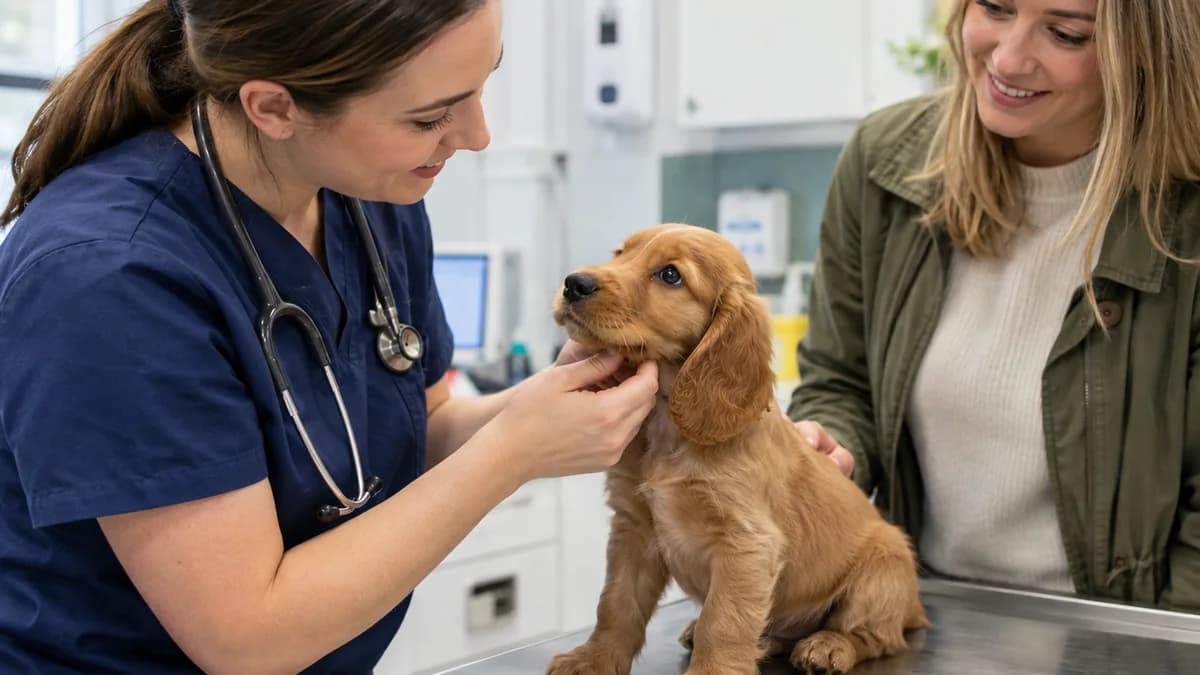
- Microchip: UK dogs must be microchipped and registered by eight weeks. Confirm the number and keeper contact details on the database.
- Identification: dogs out in public usually need a collar with the owner's name and address on a tag, subject to legal exceptions.
- Vaccinations: keep the certificate and exact vaccine dates, ask your vet about next injections and boosters.
- Parasite prevention: agree flea, tick and worming advice with your vet for your individual puppy.
- Insurance: compare excesses, lifetime limits, exclusions and waiting periods; it is separate from routine budgeting.
Go deeper with the UK puppy vaccination schedule and the official microchipping guidance.
Budget and plan the first-year tasks
Food, preventive care and insurance continue long after the welcome-home shopping. Budget separately for initial setup, recurring costs and unplanned vet bills, and build a realistic allowance for grooming, training or dog walkers if your lifestyle requires them.
The UK cost of owning a puppy guide includes a first-year calculator and transparent PDSA reference figures so you can enter your own quotes instead of relying on made-up 'average 2026' prices.
Authoritative sources
Medical, regulatory and safety statements were checked against the following UK sources on 2026-10-17. Recheck changing regulations, travel rules, vaccination guidance and AI standards at least every 90 days or before a related decision.
Frequently asked questions
What should I buy before collecting a puppy in the UK?
Buy a comfortable rest area, suitable puppy food and bowls, collar and ID tag, lead, safe car restraint, a few toys, poo bags and basic cleaning supplies. Avoid buying costly extras until you understand your puppy's size and habits.
When should I book the first vet visit?
Register with a practice before collection and ask it when to bring your new puppy for an initial check and remaining vaccinations. Bring every original medical and vaccine record.
Does a puppy have to be microchipped in the UK?
Yes. All dogs in the UK must be microchipped and registered by eight weeks of age, subject to specific veterinary exemptions. You should also ensure the keeper's contact details are current.
Can I walk my puppy before vaccination is complete?
Ask your veterinary team which environments and socialisation activities are appropriate for your puppy's vaccination status and local disease risk. You can still arrange safe, positive exposure to sights and sounds while following their advice.
How do I keep the puppy checklist organised?
Print the checklist, keep important documents together and add vet-confirmed appointment and treatment dates to a calendar or pet profile. Mark things complete after they happen, rather than setting dates from generic advice.