Key takeaways
- Keep the puppy's bed close to you initially; move it gradually later if that is your long-term preference.
- Offer an opportunity to toilet before bed and after waking, including at night when needed.
- Avoid late-night excitement, loud visitors and long periods of isolation.
- Introduce crates as welcoming spaces; never use a crate as punishment.
- Seek veterinary advice if crying is accompanied by unusual illness or pain signs.
Before sunset: prepare a reassuring sleeping space
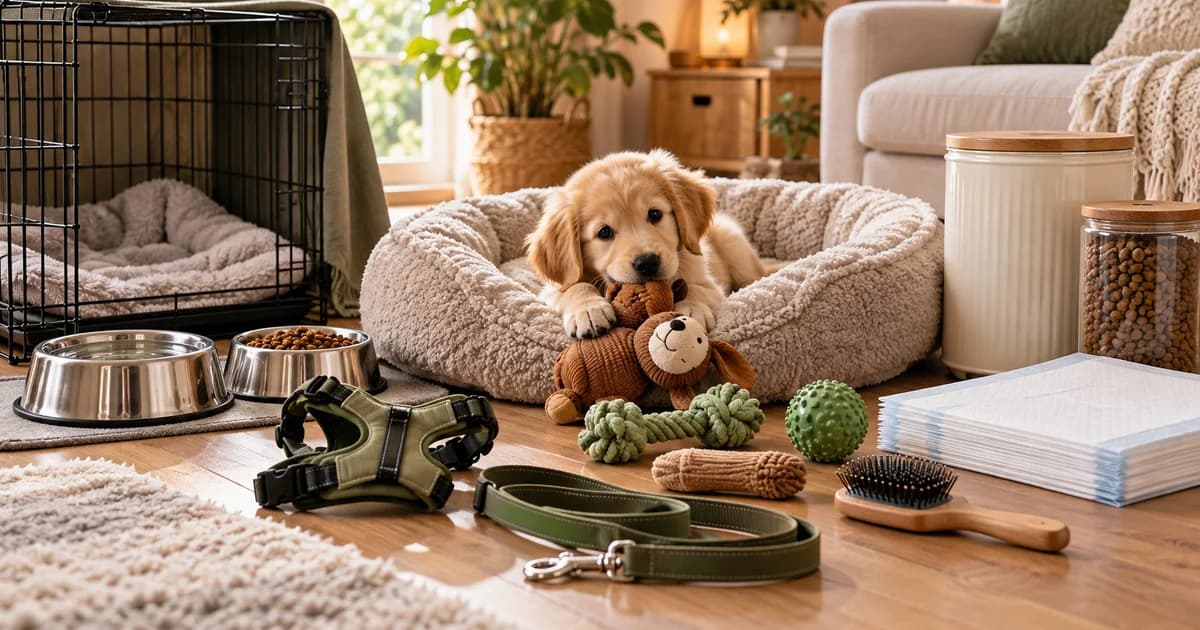
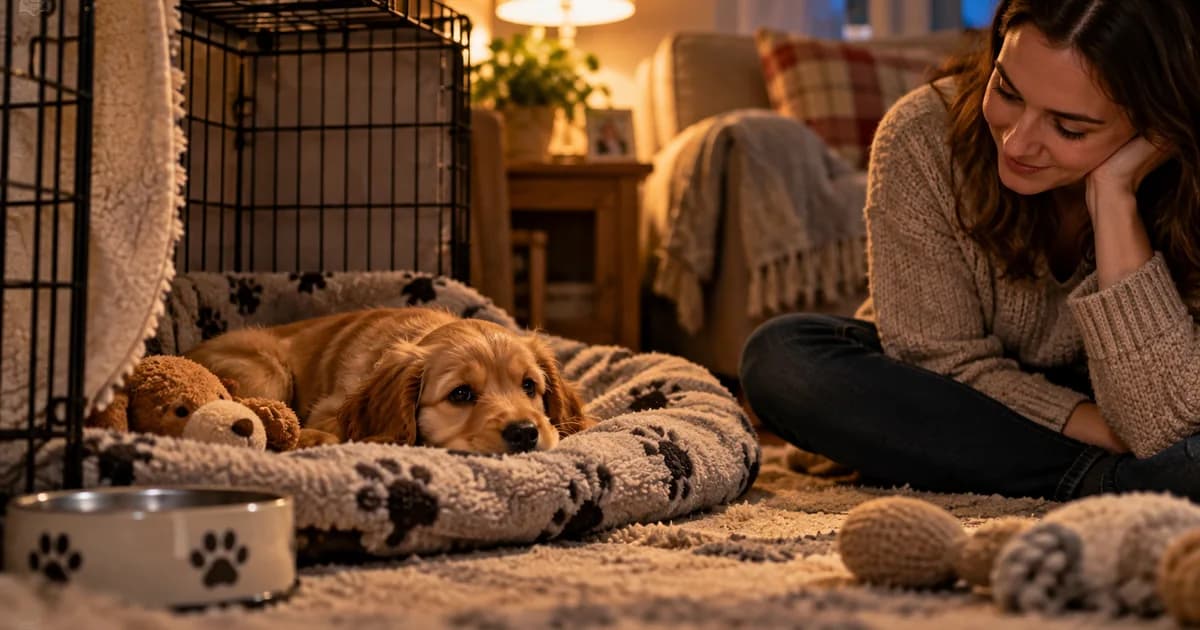
Your puppy has moved away from familiar people, dogs, smells and routines. Worry on the first night is understandable. Let them explore one quiet area with your supervision and provide bedding that is comfortable, dry and easy to wash. If the previous home supplied a clean blanket with familiar smells, place it near the bed.
- A comfortable bed or suitable crate near your sleeping area
- A familiar blanket or safe comfort toy
- Water access and a clear route for night-time toilet trips
- A dim light and a calm, predictable bedtime routine
- Cleaning supplies and a towel in case of an accident

A gentle bedtime routine for the first few nights
Keep the last hour quiet
Wind down with gentle handling or calm play. Avoid exciting games right before bedtime.
Make the last toilet trip easy
Take your puppy to the designated safe toilet area and quietly praise them if they go.
Settle close to you
Place the bed or crate near your own sleeping space. Stay calm and offer reassurance without making a big event of bedtime.
Expect waking
Young puppies may need to toilet at night. Check for this and then calmly return them to their bed, keeping lights and stimulation low.
Repeat tomorrow
Consistency helps. Move the sleeping place further away only gradually after your puppy is comfortable, if that is your preference.
These steps follow Blue Cross guidance on puppy sleep.
What to do if your puppy cries at night
Do not assume every whimper is 'attention seeking'. The puppy may need the toilet, be frightened, thirsty, uncomfortable or unwell. First check basic needs, then respond calmly. The aim is to help the puppy feel secure while gradually developing a predictable sleep routine—not to force silence.
- Take your puppy outside or to the planned toilet spot if they may need to go.
- Check bedding temperature, position and whether the puppy can settle comfortably.
- Use a calm voice and short reassurance rather than punishment, shouting or exciting play.
- If they repeatedly panic when alone, reduce the difficulty and seek qualified, reward-based behaviour advice.
- If they show unusual lethargy, vomiting, pain, breathing difficulty or another health concern, speak with a vet.
Crate, bed or bedroom: which is best?
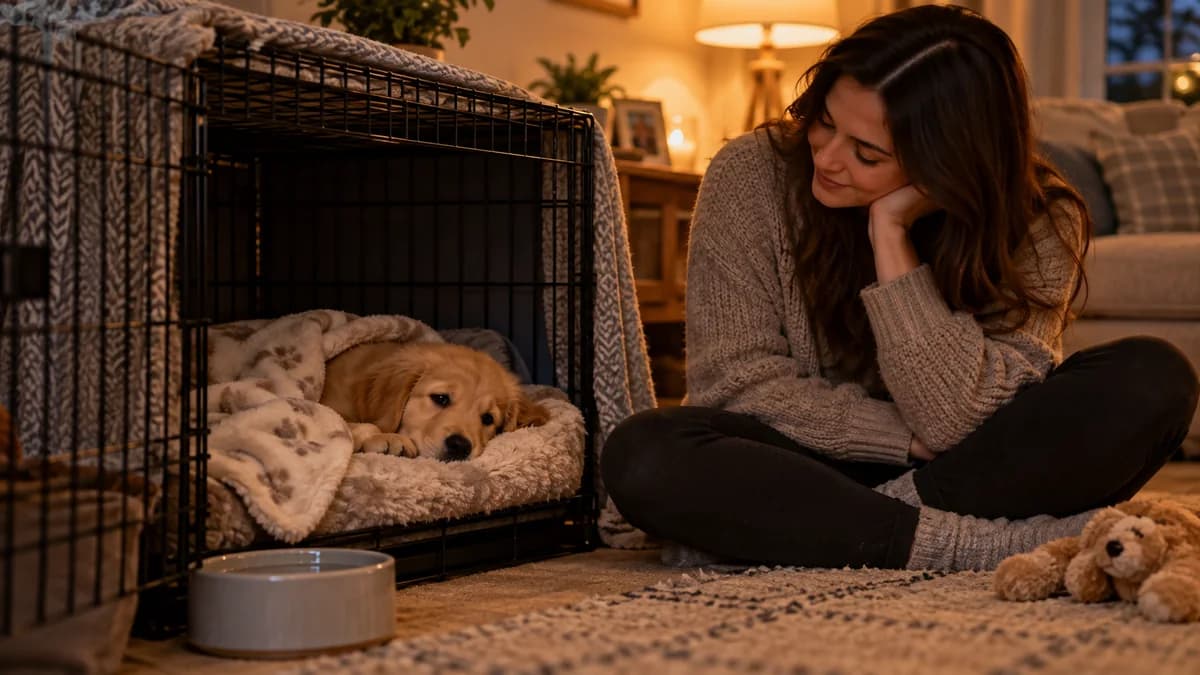
There is no single correct room for every dog. Blue Cross recommends starting with the puppy near you, often in your bedroom, to provide reassurance and make toilet needs easier to notice. A crate can be a useful safe den only if introduced carefully and never used as punishment. A normal dog bed in a puppy-proofed area can also work.
| Option | Potential benefit | Important consideration |
|---|---|---|
| Bed near your bed | Reassurance and easy night-time checks | Puppy-proof the area and supervise safely |
| Positively introduced crate | Predictable resting den | Build up comfort gradually; do not force distress |
| Separate room immediately | May match your longer-term plan | Can be overwhelming for a newly separated puppy |
If you're using a crate, read the Blue Cross crate-introduction steps.
What to expect after the first night
Some puppies settle quickly; others need days or weeks of extra reassurance. Continue using a consistent toileting, feeding, play and rest rhythm. Change one thing at a time rather than repeatedly moving the sleeping area or changing the rules every night.
Visit our puppy toilet training guide for a daytime and evening routine, and the new puppy checklist hub to make sure the rest of the first-week essentials are covered.
Authoritative sources
Medical, regulatory and safety statements were checked against the following UK sources on 2026-10-17. Recheck changing regulations, travel rules, vaccination guidance and AI standards at least every 90 days or before a related decision.
Frequently asked questions
Should I leave my puppy to cry on their first night?
First check whether your puppy needs the toilet, feels unwell or is frightened. Provide calm reassurance and gradual settling rather than punishing fear or forcing isolation.
Where should my puppy sleep on the first night?
Blue Cross recommends keeping their bed or positively introduced crate close to you initially, often in your bedroom, then moving it gradually later if needed.
Will my puppy need the toilet overnight?
Many young puppies do. Expect interruptions, provide a calm trip to the designated toilet place when needed and return to bed without energetic play.
When should I call a vet about night-time crying?
Seek veterinary advice if crying comes with signs of illness, injury or pain, including vomiting, unusual lethargy, breathing difficulty or inability to settle despite basic comfort and toileting.