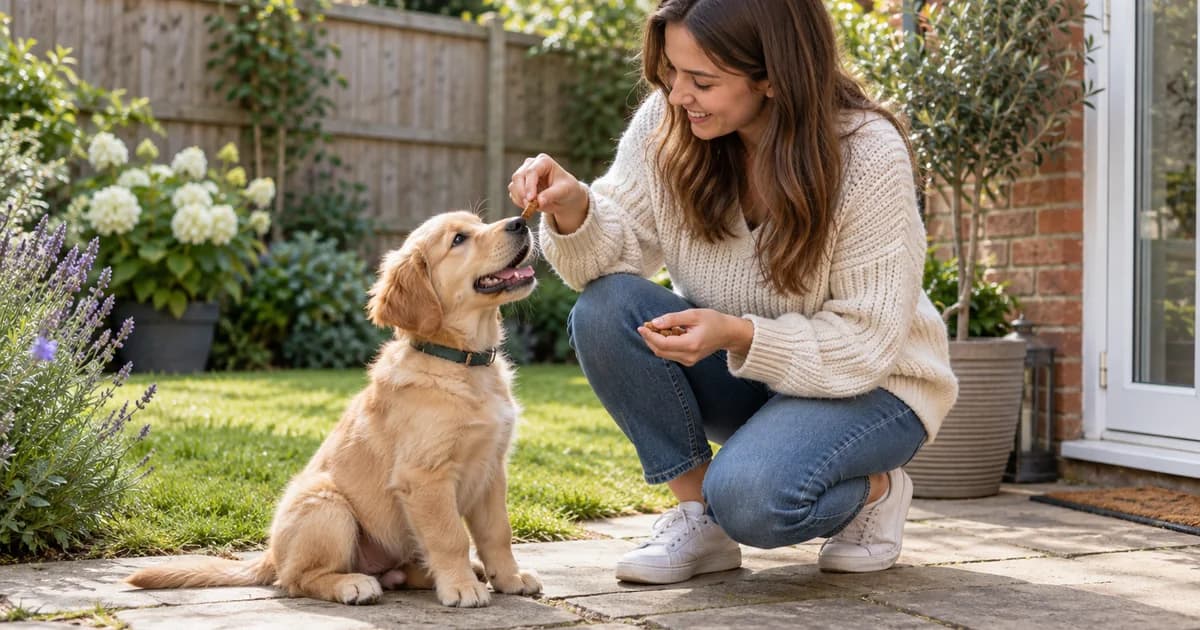
Key takeaways
- Give lots of opportunities to succeed rather than waiting for an accident.
- Reward outdoors immediately after toileting; do not delay until back in the house.
- Use one familiar spot and a consistent gentle cue if helpful.
- Never punish indoor accidents. Clean and adjust your supervision or schedule.
- Sudden regression, straining, discomfort or unusual frequency warrants veterinary advice.
Why toilet training is about timing, not punishment
A young puppy is learning bladder and bowel control while also learning your household's routine. Training is fastest when owners arrange frequent opportunities to toilet in an appropriate place and immediately reward successes. Punishing a mistake does not teach the puppy where they should go; it can make them afraid to toilet near people.
The UK RSPCA toilet training guide recommends reward-based training, consistency and watching for cues.
The five-step toilet-training loop
1. Watch for the right moment
Offer a trip after waking, eating, naps and play. Sniffing, circling or wandering away can mean the puppy needs to go.
2. Visit the same place
Calmly guide your puppy to a suitable, safe toilet area. Reduce distractions and let them sniff.
3. Wait without pressure
Give your puppy a little time. You may use a consistent cue when they begin, but avoid repeating it frantically.
4. Reward straight away
Praise gently and offer a suitable tiny reward as soon as toileting finishes, while still in the correct spot.
5. Record and repeat
Notice patterns around meals, naps and accidents. Gradually extend intervals only as the puppy is reliably succeeding.
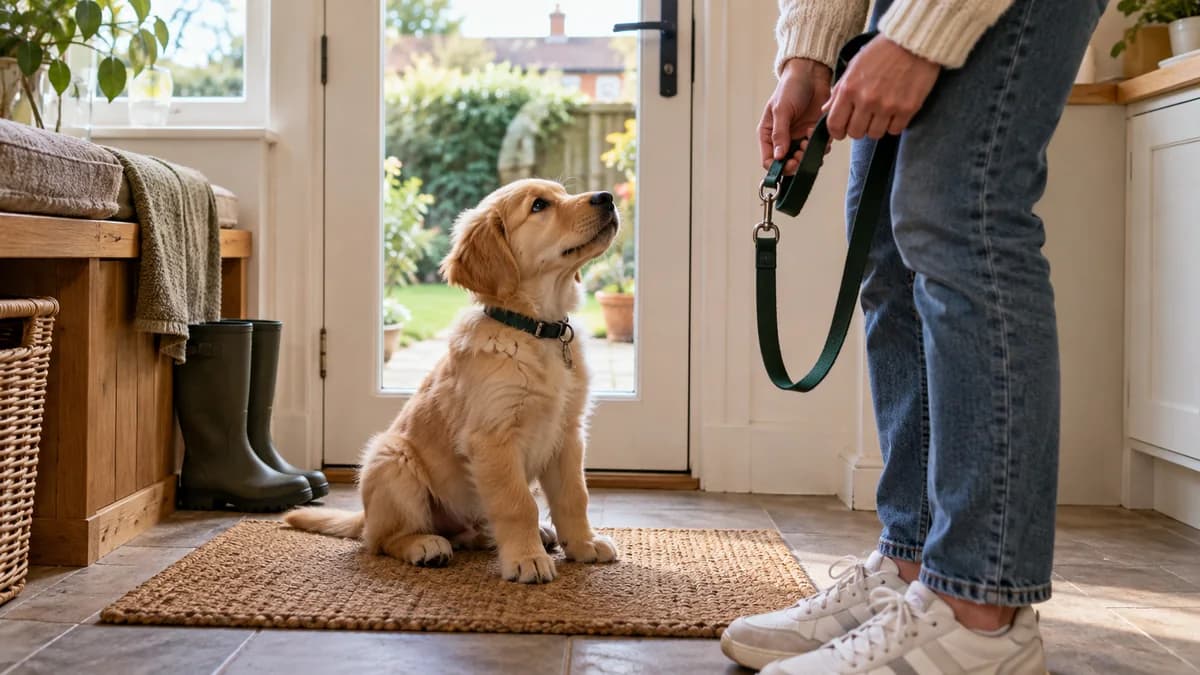
Example puppy toilet training schedule (adapt to your puppy)
This is a sequence of opportunities, not a rule that every puppy should hold on for a fixed number of hours. Young puppies vary a lot. Use your own puppy's accidents and successes to work out the right frequency, and get a vet's help if anything seems abnormal.
| Trigger | Your action | What to record |
|---|---|---|
| First thing on waking | Offer the agreed toilet spot immediately | Did they wee or poo? |
| After each meal | Take them out again soon after eating | Time and outcome |
| After play or excitement | Provide another toilet opportunity | Signals before going |
| After each nap | Repeat the same calm trip | Successes, misses and interval |
| Before bed and during waking at night | Keep it quiet and businesslike | Night waking patterns |
What to do after an accident indoors
Accidents are part of learning. Do not shout, scold or rub your puppy's nose in a mess. If you notice a puppy preparing to toilet, interrupt gently and guide them to the right place. If the accident is finished, quietly clean it, consider what trigger you missed and provide an earlier opportunity next time.
- Use a pet-safe cleaner suitable for the floor to remove odour that may invite a repeat accident.
- Temporarily reduce the puppy's unsupervised roaming space if you keep missing early signs.
- Pay attention to changed routines, visitors, feeding times and excitement.
- If the puppy suddenly begins having many accidents after previously doing well, contact your vet.
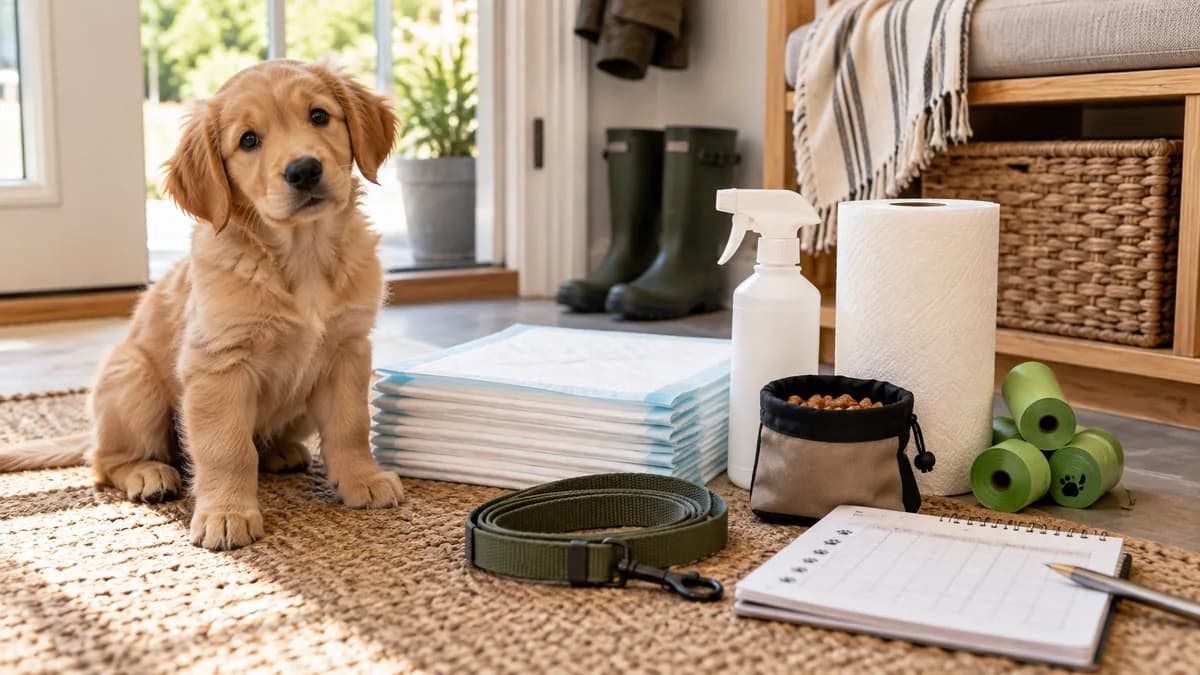
Troubleshooting: when progress stalls
| Problem | Possible explanation | Practical response |
|---|---|---|
| Puppy wees as soon as you come inside | Outside distractions or the break was too short | Return to a quieter spot and reward immediately after success |
| Accidents after a nap | Delay between waking and the toilet opportunity | Have shoes and lead ready before the puppy wakes |
| Refuses to toilet in rain | New texture, cold or distractions | Offer a sheltered area, be patient and maintain rewards |
| Previously reliable puppy regresses | Schedule change, stress or possible health problem | Reinforce basics; call your vet if sudden, frequent or painful |
How to move from frequent trips to reliable habits
As your puppy gains confidence and control, increase gaps gradually rather than abruptly removing trips. Keep rewarding new or difficult situations, and expect setbacks when routines change, during travel or in unfamiliar homes.
Continue with the first-night settling guide for night waking and the main puppy checklist for feeding, health checks and first-year planning.
Authoritative sources
Medical, regulatory and safety statements were checked against the following UK sources on 2026-10-17. Recheck changing regulations, travel rules, vaccination guidance and AI standards at least every 90 days or before a related decision.
Frequently asked questions
How long does it take to toilet train a puppy?
There is no reliable universal age or deadline. Some puppies learn quickly; others need months of consistent supervision, opportunities and immediate rewards. Speak with a vet if progress is unusually difficult or there are health symptoms.
How often should I take my puppy out?
Offer a trip after sleep, meals and play, when you see sniffing or circling, before bedtime and during night waking when needed. Adjust frequency to your puppy's actual pattern and age.
Should I punish a puppy for accidents?
No. Punishment can frighten a puppy and make them hide toileting. Clean calmly and improve supervision and timing instead.
Can my unvaccinated puppy use the garden?
Ask your own vet about your private garden, other animals that use it and local infection risks. Shared public dog areas may pose different risks before vaccination protection is complete.