Key takeaways
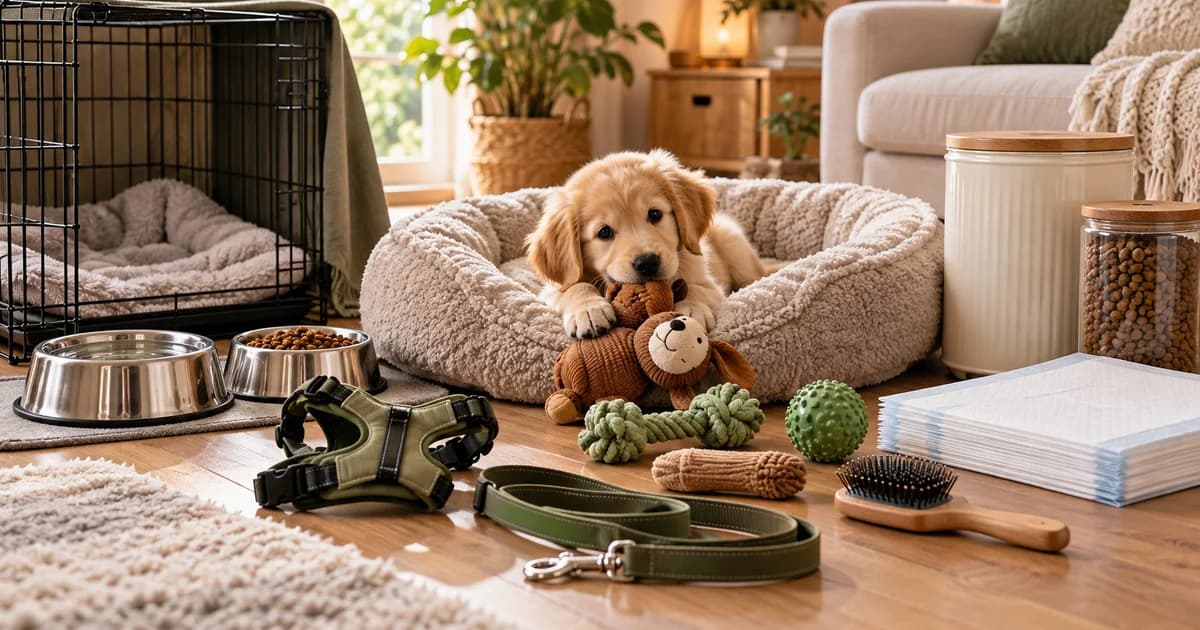
- Prioritise safe travel equipment, rest space, food, water and identification.
- Measure before choosing collars, harnesses or crates; a puppy grows quickly.
- Keep the same complete puppy food at first unless a vet recommends otherwise.
- Choose durable, size-appropriate toys; remove damaged items and supervise chewing.
- Avoid buying 'premium' products for the sake of it when fit, hygiene and safety matter more.
The 12 things worth having on day one
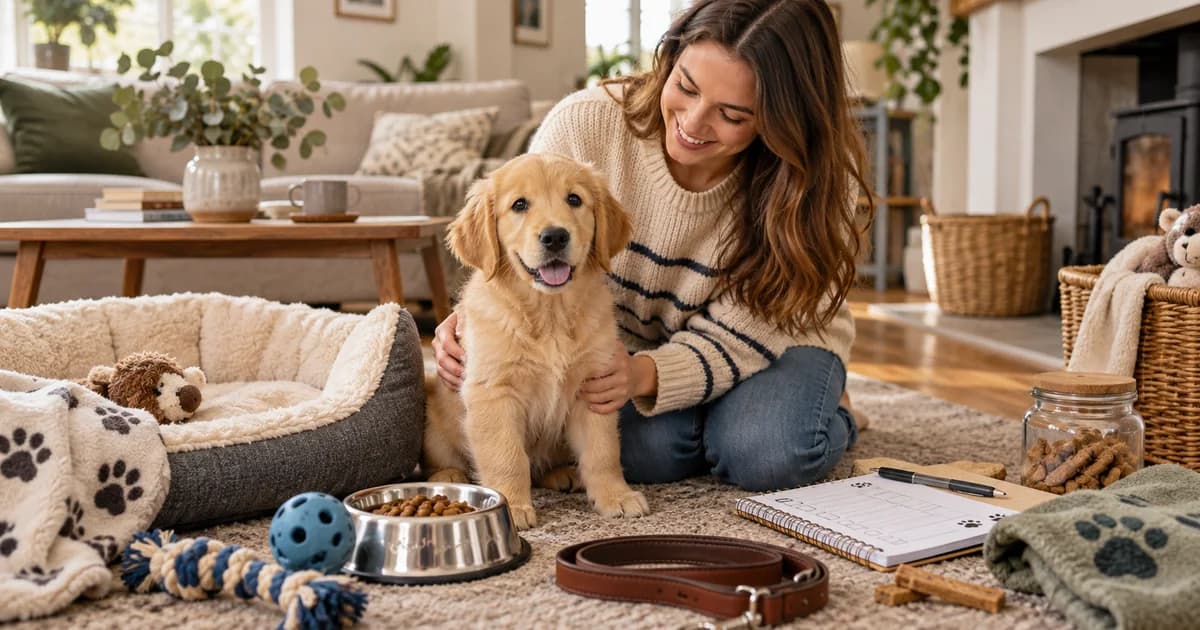
Picture the first 24 hours: a safe journey home, drinking water, a quiet nap, several toilet breaks and an evening of settling. Your shopping list should serve those needs before anything decorative.
| Item | How to choose | When needed |
|---|---|---|
| Washable bed and blanket | Low, comfortable, cleanable and free of loose parts | Before arrival |
| Suitable crate (optional) | Big enough to turn around and lie comfortably; introduce positively | Before arrival if using one |
| Food and water bowls | Stable, easy to clean and right height for your puppy | Before arrival |
| Complete puppy food | Continue the known diet initially, then ask a vet if a change is needed | Before arrival |
| Collar and ID tag | Adjustable and comfortable; owner's name and address on the tag | Before public outings |
| Lead and suitable harness | Correct fit with no rubbing, escape gaps or excess tightness | Before training or outings |
| Safe vehicle restraint | Secure crate or appropriate harness and attachment | Collection day |
| Puppy-safe chews and toys | Different textures; not small enough to swallow | Day one |
| Poo bags | Keep at the toilet exit | Day one |
| Accident cleaner | Pet-safe, suitable for flooring, ideally enzymatic | Day one |
| Soft grooming brush | Choose for your puppy's actual coat | First week |
| Dog toothpaste and brush | Dog-specific products, introduced gently | First weeks |
Size matters: collars, beds, crates and chewing toys
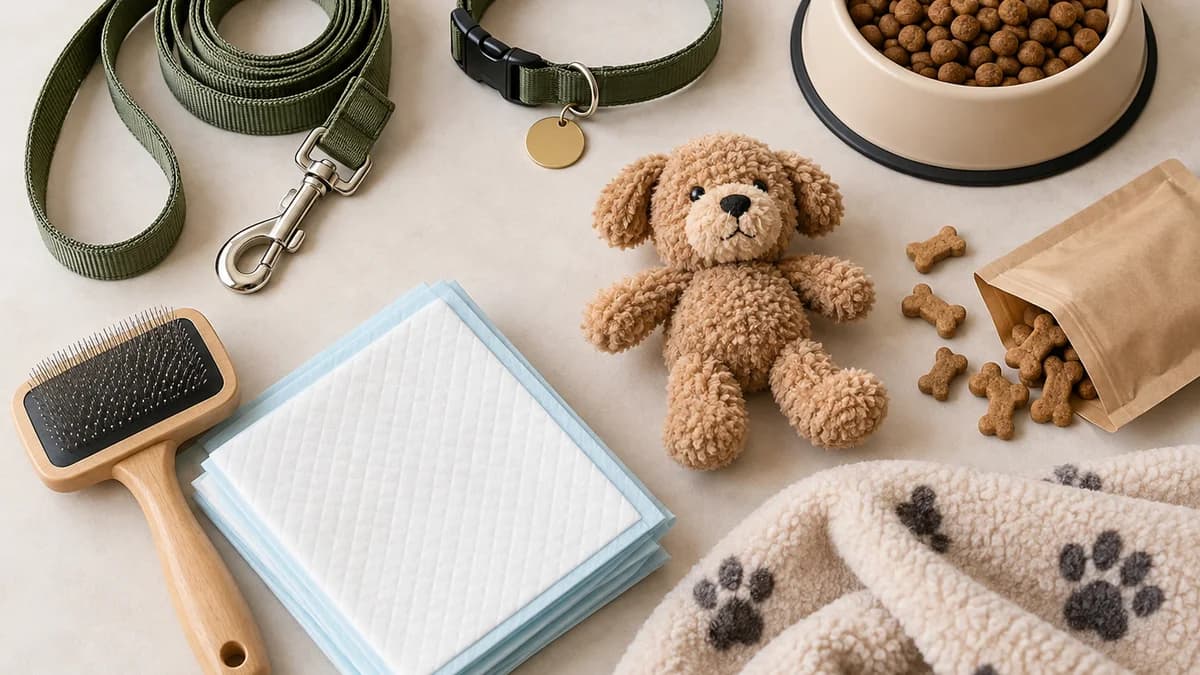
A product is not safe just because the label says 'puppy'. Fit your gear to the individual dog. Check manufacturer size guidance and recheck the collar and harness as the puppy grows. Remove or replace anything fraying, splintering or small enough to swallow.
Collar and tag
Check that it fits without pinching or slipping over the head. Keep the ID tag legible as contact details change.
Harness and lead
Choose a shape that allows shoulder movement and a fit that does not rub under the legs. Try it indoors before outings.
Crate or bed
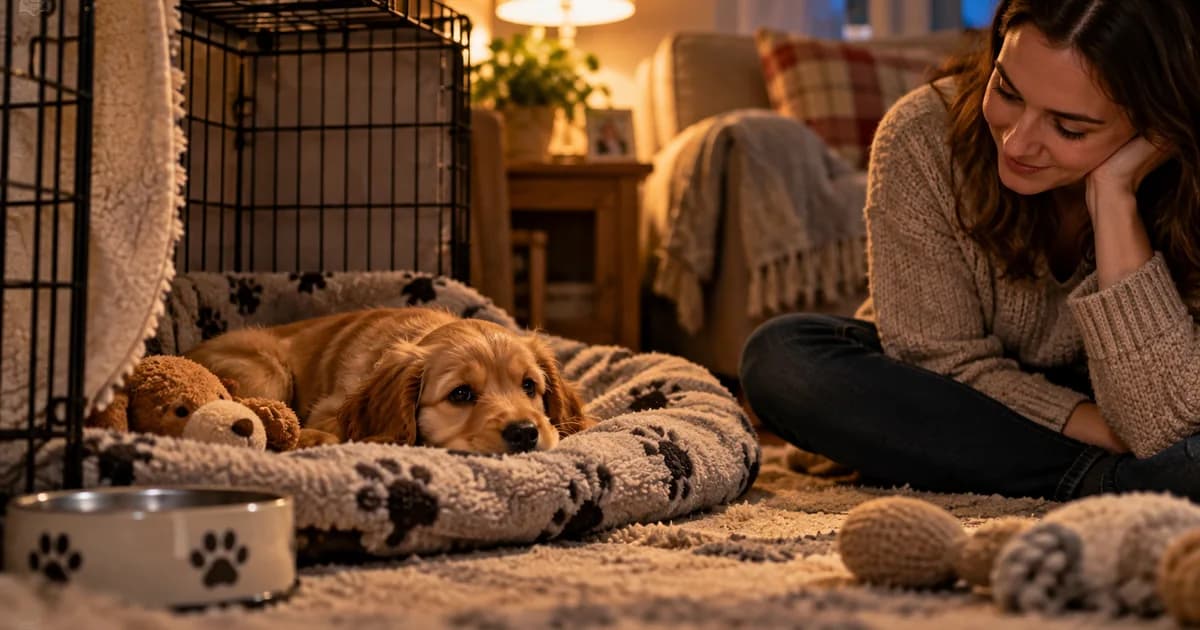
Provide comfortable turning and stretching space, adequate ventilation and easy cleaning. A crate should never be a punishment.
Toys
Supervise until you know how your puppy chews. Avoid loose eyes, stuffing, fragile fragments or hard objects likely to damage teeth.
Blue Cross provides guidance on introducing a crate positively.
Build a calming sleep corner without overspending
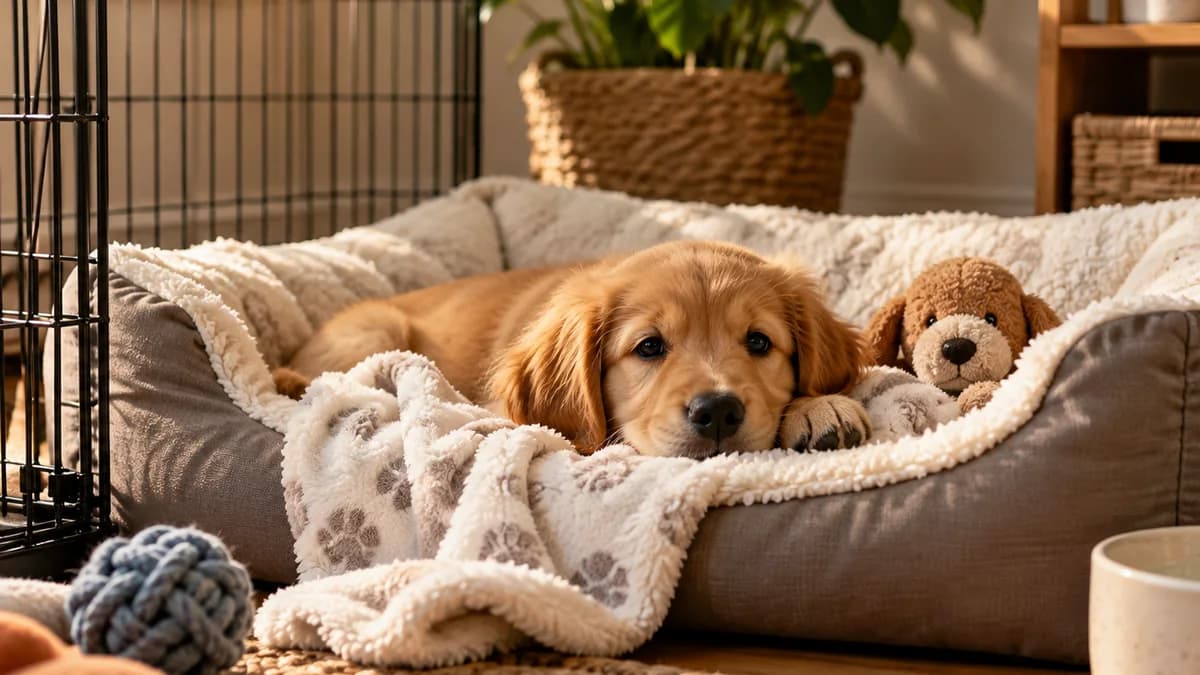
Place your puppy's bed near people initially, with a familiar-smelling blanket if available. A quiet, warm area is better than an expensive setup in the noisiest part of the house. Washable bedding saves effort after accidents; a second cover can be more useful than a second elaborate bed.
See the first night with a new puppy article for a calm bedtime routine and how to respond to crying.
Training and hygiene essentials: buy less, use them consistently
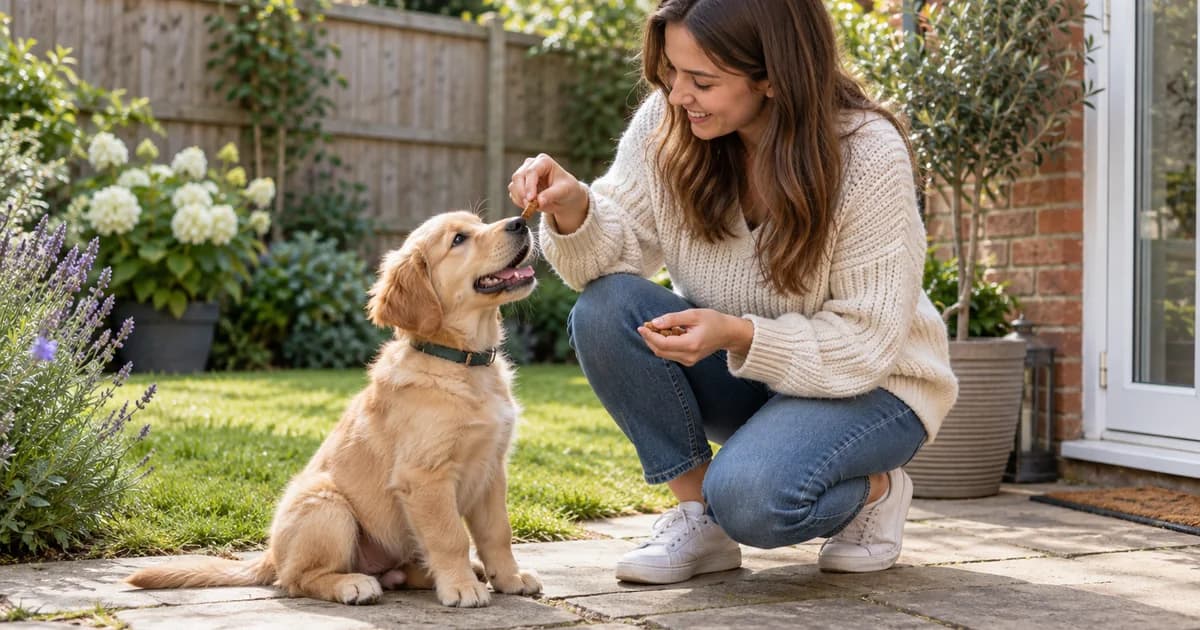
Treat pouches, a few small reward treats, poo bags and an appropriate cleaner are often enough to begin. Some households use puppy pads as a temporary management tool, but outdoor reward-based toileting is usually the eventual goal when there is a safe, accessible place.
- Keep a small container of rewards close to the garden exit.
- Use dog-safe cleaning products and follow dilution and surface instructions.
- Choose a brush suited to a smooth, short or long coat rather than the trendiest brush.
- Start dental handling gradually with dog toothpaste; never use human toothpaste.
- Avoid training tools that cause pain, fear or discomfort.
For a daily routine, use our reward-based puppy toilet training plan.
What you can safely postpone buying
Fancy clothing, dozens of toys, large bags of a new food, an automated feeder and premium grooming subscriptions can wait. Growing puppies change size fast, and you may discover their preferences after the first fortnight.
How to shop by budget, not by advertising
Create two columns: 'must have before arrival' and 'replace or add later'. Compare total delivered costs, sizing, cleaning requirements and retailer return rules. Insurance, vaccinations and other healthcare costs need a separate budget rather than being buried in the shopping basket.
The cost of owning a puppy in the UK article gives a calculator for one-off and recurring costs. Return to the main new puppy checklist for the complete sequence of first-year tasks.
Authoritative sources
Medical, regulatory and safety statements were checked against the following UK sources on 2026-10-17. Recheck changing regulations, travel rules, vaccination guidance and AI standards at least every 90 days or before a related decision.
Frequently asked questions
What are the most important things to buy for a new puppy?
Prepare a bed, familiar complete puppy food, bowls, a collar and ID tag, lead, safe car restraint, poo bags, a few appropriate toys and cleaning materials before collection.
Is a puppy crate essential?
No. A crate may be useful for some households if it is the right size and introduced gradually and positively, but a quiet, safe resting space is the underlying need.
Do I need puppy pads?
Not always. They can be useful for management in some homes, but they are not a substitute for a consistent, reward-based toilet plan and frequent opportunities to go in the appropriate place.
Should I buy a big bag of new puppy food?
It's usually wiser to continue the puppy's existing complete food initially and discuss any changes with your vet. A gradual transition helps reduce digestive upsets.