Key takeaways
- Vaccination dates are individual: vaccine brand, history and clinical judgement matter.
- PDSA describes a primary course often starting at 6–8 weeks, with doses roughly 2–4 weeks apart.
- Protection is not immediate after an injection; ask when your puppy is safe in different environments.
- Keep certificates, batch information and vet-recommended future dates together.
- If your puppy missed a dose, contact your vet; do not improvise a replacement timetable.
Puppy vaccination schedule UK: the general timeline
Schedules online are examples, not prescriptions. The PDSA explains that puppies ideally begin vaccinations at around six to eight weeks and often have two injections spaced roughly two to four weeks apart, although some puppies require three. Vaccine protocols can vary across veterinary practices and products.
| Stage | General timing | Your action |
|---|---|---|
| Previous vaccination records | Before or at collection | Ask for the original certificate, dates, product and practice |
| Primary vaccine course begins | Often around 6–8 weeks | Check what, if anything, has already been given |
| Subsequent primary dose(s) | Often 2–4 weeks later | Book dates set by the vet for that vaccine product |
| Protection before wider exposure | Not immediate after final injection | Ask when and where your puppy may safely go outside |
| Ongoing boosters | Vet-confirmed schedule in later life | Save the dates and next appointment details |
Which diseases do UK puppy vaccines help protect against?
UK veterinary programmes commonly protect against important infectious diseases including canine parvovirus, distemper, infectious canine hepatitis and leptospirosis. Your vet can explain what is in the particular vaccine administered, the diseases relevant in your area and any non-core vaccines that may be appropriate.
- Parvovirus can cause severe gastrointestinal disease, especially in young dogs.
- Distemper and canine hepatitis are serious viral diseases addressed by common dog vaccination programmes.
- Leptospirosis protection is commonly boosted on a different timetable from some other components.
- Additional vaccines or requirements may depend on travel, kennels, lifestyle and exposure risk.
Read the PDSA dog vaccine guidance for background on UK dog vaccines, boosters and travel considerations.
When can a puppy go for walks after vaccination?
An injection does not mean instant immunity. The gap between the end of a primary course and adequate protection depends on the vaccination protocol. PDSA notes that it can take time after the final injection for protection to develop. Ask your vet which public spaces, grass areas and dog contacts are appropriate for your own puppy.
Socialisation matters during early puppyhood too. Safe experiences may include carrying the puppy to observe normal sights and sounds, gentle handling at home and carefully planned introductions to known, healthy, vaccinated dogs where your vet advises it is safe. A blanket ban on all new experiences is not the goal, but neither is exposing an unprotected puppy to risky areas.
RSPCA's puppy-care timeline discusses early socialisation without assuming every puppy has completed vaccinations.
What to keep in your puppy's vaccination record
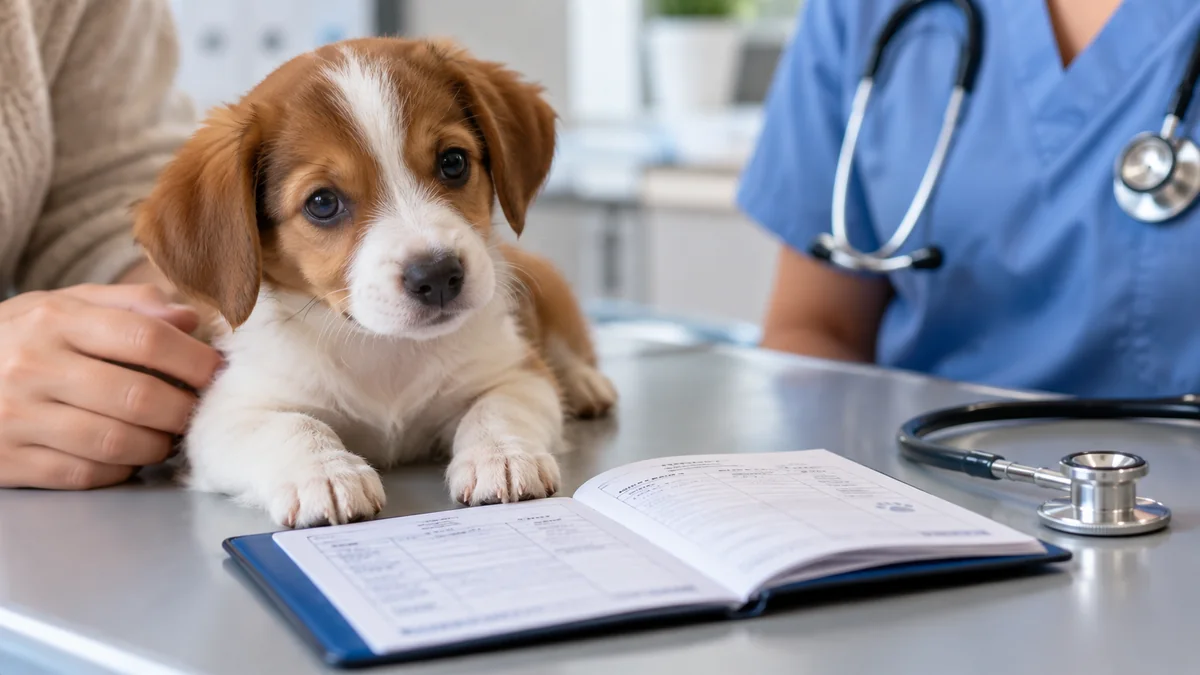
A vaccination book or practice certificate is your primary reference. A digital copy is a useful backup for travelling, kennels, daycare or changing vets. Preserve the original and ask your practice what details it can share with you.
- Puppy's full name, identification and microchip number
- Date each dose was given and name of the administering veterinary practice
- Vaccine product, and brand or batch details recorded by the vet
- Date of the next appointment or course completion confirmation
- Any vet-advised restrictions, precautions or post-vaccine follow-up
- A clear image or file copy of the original vaccination record
After the primary course: boosters and reminders
Protection needs maintaining, but not every vaccine component follows the same interval. PDSA describes annual leptospirosis boosters and longer intervals for some other core components. Your own vet should tell you the exact booster plan for your dog and provide the next date in writing.
For an owner-friendly system for storing these details, read our pet vaccination reminder app guide or return to the new puppy care checklist.
What if the breeder's record is missing or a vaccine is late?
Do not guess which injection is due, repeat a dose yourself or assume the puppy is protected because a breeder says so. Contact a veterinary practice promptly, show them the documents available and ask for a safe plan. Some protocols may need adjustment after missed appointments.
Authoritative sources
Medical, regulatory and safety statements were checked against the following UK sources on 2026-10-17. Recheck changing regulations, travel rules, vaccination guidance and AI standards at least every 90 days or before a related decision.
Frequently asked questions
At what age does a puppy get its first vaccination in the UK?
PDSA describes an ideal start around 6–8 weeks, but the exact schedule should be confirmed by a vet after checking previous records and the vaccine product.
How long after the second puppy vaccination can they go outside?
Do not use a fixed internet answer. Vaccine products and protocols vary, and full protection is not immediate. Ask the administering veterinary practice exactly which environments are safe and when.
What if my puppy missed a vaccination?
Contact your veterinary practice with the existing records so it can advise whether the course or dates need adjusting. Do not create a replacement schedule yourself.
Do puppies need boosters after the initial vaccinations?
Yes, booster protection is generally needed, but vaccine components can have different intervals. Your vet should provide the correct timetable for the vaccines your puppy receives.