
Key takeaways
- Core UK vaccines cover parvovirus, distemper, infectious hepatitis and leptospirosis.
- Puppy course: usually two injections 2–4 weeks apart from 6–8 weeks old, then a first booster around 12 months later.
- Adult dogs need leptospirosis every year; distemper, hepatitis and parvovirus are usually every three years.
- That is why there is a booster appointment every year, even though not every component is given every year.
- Kennel cough (a nasal vaccine, yearly) and rabies (required for travel) depend on your dog's lifestyle.
- If a booster is more than about three months late, your vet may need to restart the course, so track the date.
Which vaccinations does a dog need in the UK?
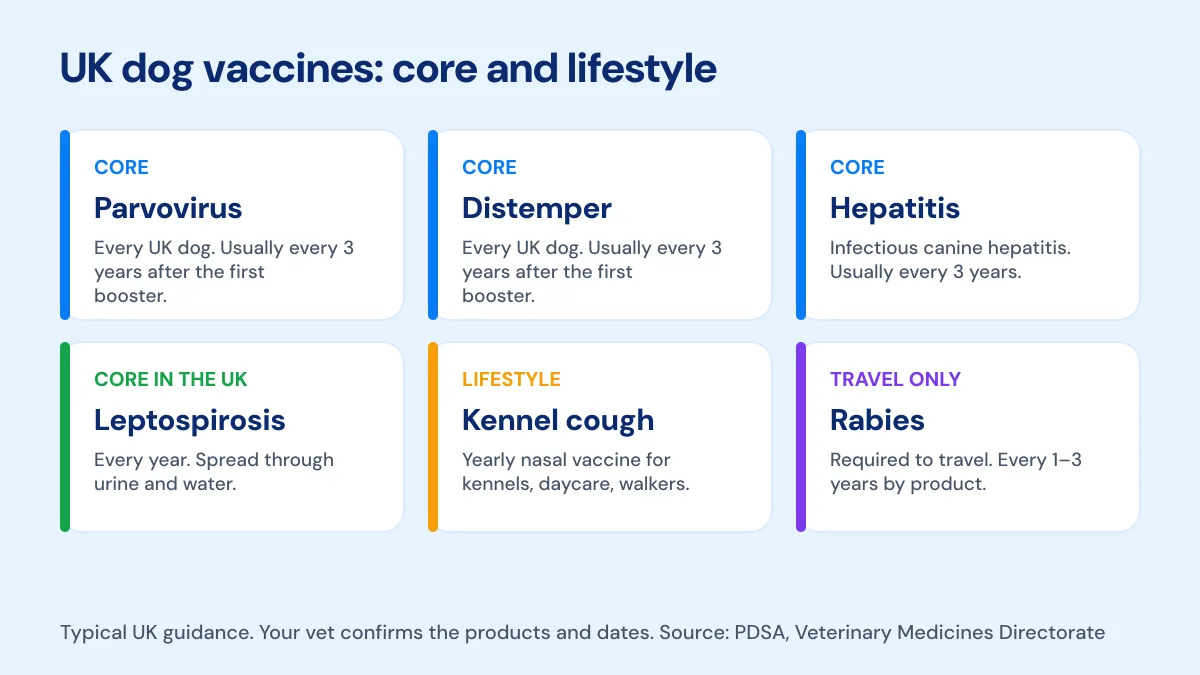
UK vaccination advice splits into core vaccines, which every dog should have, and lifestyle vaccines, which depend on where your dog goes and what it does. PDSA lists four core diseases for all dogs living in the UK. Kennel cough and rabies are the two common extras.
| Disease | Core or lifestyle? | Typical adult interval | Why it matters |
|---|---|---|---|
| Parvovirus | Core | Usually every 3 years after the first booster | Severe vomiting and diarrhoea; especially dangerous for young dogs |
| Distemper | Core | Usually every 3 years after the first booster | Serious viral disease affecting several body systems |
| Infectious canine hepatitis | Core | Usually every 3 years after the first booster | Viral disease that can damage the liver |
| Leptospirosis | Core in the UK | Every year | Bacterial disease spread through urine and water; can also infect people |
| Kennel cough | Lifestyle | Every year while at risk | Usually required by kennels, daycare and many dog walkers |
| Rabies | Travel only | Every 1–3 years depending on the vaccine | Legal requirement for taking a dog abroad and bringing it back |
Not sure whether your dog needs the lifestyle vaccines? Read our guides to the kennel cough vaccine and the rabies vaccine for travel.
The dog vaccination schedule, from puppy to senior
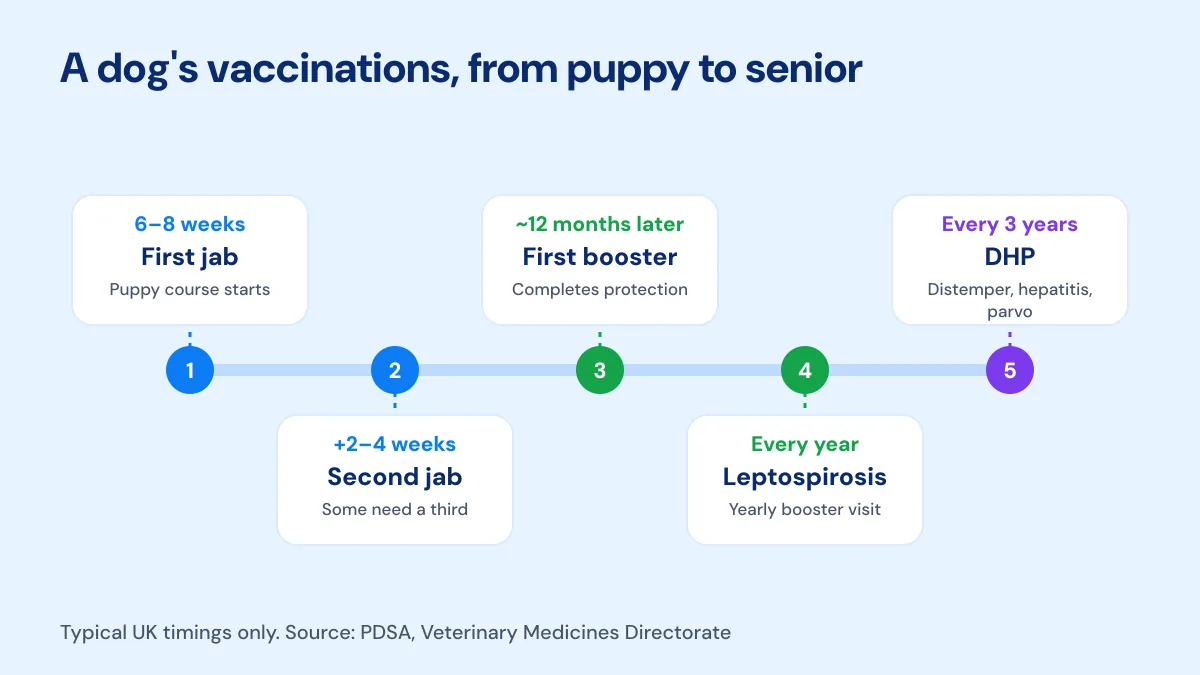
A dog's vaccination history has three stages. The puppy primary course builds protection while the antibodies from the mother fade. The first booster, around a year later, completes it. After that, regular boosters keep protection topped up for life.
Puppy primary course (from 6–8 weeks)
Usually two injections 2–4 weeks apart; some puppies need a third. PDSA says full protection develops 2–4 weeks after the final injection, depending on the vaccine.
First booster (around 12 months later)
PDSA notes that the protection from the primary course lasts about a year, so the first booster is an important appointment, not an optional extra.
Yearly appointments for life
Leptospirosis every year, and distemper, hepatitis and parvovirus usually every third year. The VMD states that most UK-authorised core dog vaccines have a revaccination interval of at least three years.
Extras when lifestyle changes
Add kennel cough before kennels, daycare or a new walker, and rabies before any trip abroad.
For the puppy stage in detail, including when your puppy can go for walks, see our puppy vaccination schedule UK guide.
Work out what your dog is due next
Enter the date of your dog's last booster to see the typical next leptospirosis and three-yearly booster dates, and the point after which a vet may want to restart the course. Take the vaccination card to your vet: the products recorded there decide the real dates.
Interactive dog booster planner
Enter the dates from your dog's vaccination card. Nothing you type is stored or sent anywhere.
Enter the date of the last booster to see what is typically due next.
Adult dogs, rescue dogs and dogs with unknown history
If you adopt an adult dog without a reliable vaccination record, Woodgreen advises that your vet will usually recommend a full course of two doses, as for a puppy, so the dog is protected against UK diseases. Bring any paperwork you have; batch stickers and dates help your vet decide.
- Keep the original vaccination card and take a clear photo of every page as a backup.
- Ask the rescue or previous owner for the vet practice name, so records can be requested.
- Until your vet confirms protection, avoid busy dog areas and high-risk leptospirosis places such as ponds, slow rivers and farmland.
- Book the first health check soon after adoption, and ask about worming and flea treatment at the same time.
Are dog vaccines safe? Side effects to watch for
Most dogs have no side effects. PDSA describes mild effects such as a slightly high temperature, low energy or a reduced appetite, which usually pass within 24–48 hours. Serious reactions are extremely rare. Contact your vet if your dog seems unwell after a vaccination, has facial swelling or breathing difficulty, or if mild signs last longer than two days.
Vets and owners can report a suspected reaction to the manufacturer or to the Veterinary Medicines Directorate. For the leptospirosis vaccine specifically, our L2 vs L4 guide summarises the latest VMD safety figures.
How to keep boosters affordable and on time
Booster prices vary by practice and region, so ask your own practice for a current quote rather than relying on online averages. Many UK practices offer monthly preventive-care plans that bundle the yearly booster, a health check and parasite treatment; ask whether yours does and compare it with paying per visit.
The most expensive outcome is usually a booster missed by months, because a restart means two injections instead of one. Woodgreen makes the same point: keeping up with the yearly visit saves money as well as protecting your dog.
Already late? Read what to do if you missed your dog's booster. Want reminders? See our pet vaccination reminder app guide.
Authoritative sources
Medical, regulatory and safety statements were checked against the following UK sources on 2026-11-23. Recheck changing regulations, travel rules, vaccination guidance and AI standards at least every 90 days or before a related decision.
- PDSA — Dog vaccines
- Veterinary Medicines Directorate — Position on vaccines for dogs
- Veterinary Medicines Directorate — Leptospira vaccine safety update (March 2026)
- Woodgreen — Dog vaccinations: lifetime protection guide
- The Kennel Club — Vaccinations for dogs and puppies
- RVC — Dog vaccinations
- GOV.UK — Taking your pet dog, cat or ferret abroad
Frequently asked questions
What vaccinations does my dog need in the UK?
All UK dogs should be vaccinated against parvovirus, distemper, infectious hepatitis and leptospirosis. Kennel cough is recommended for dogs that mix with many others or go to kennels, and rabies is needed only for travel abroad.
Do dogs need vaccinations every year?
Most dogs need a booster appointment every year because leptospirosis protection lasts about a year. Distemper, hepatitis and parvovirus are usually given every three years, so not every component is given at every visit.
How long do dog vaccinations last?
The puppy course protects for about a year until the first booster. After that, leptospirosis lasts about a year and the core viral vaccines usually last at least three years, depending on the product your vet uses.
Can I walk my dog if its vaccinations have lapsed?
Ask your vet first. PDSA advises keeping a dog that is not fully protected away from other dogs and from high-risk leptospirosis areas such as farm fields, ponds and rivers until its vaccinations are up to date.
Is the kennel cough vaccine a core vaccine?
No. It is a lifestyle vaccine, but most kennels, daycares and many walkers require it, and it is given yearly as a squirt up the nose.
Do indoor or older dogs still need boosters?
Discuss it with your vet. Leptospirosis spreads through water and rodent urine, and parvovirus survives in the environment, so most UK vets still recommend core protection for older and less active dogs.