Key takeaways
- A few weeks late: book the booster now; protection may last about 2–3 months past the due date.
- More than about three months late: your vet may recommend a two-dose restart.
- Leptospirosis is the component most likely to need restarting, because its protection is the shortest.
- Until protected, avoid unknown dogs and water, farmland and areas with rodents.
- Rabies is different: a missed rabies booster means restarting and waiting again before travel.
How late is too late?
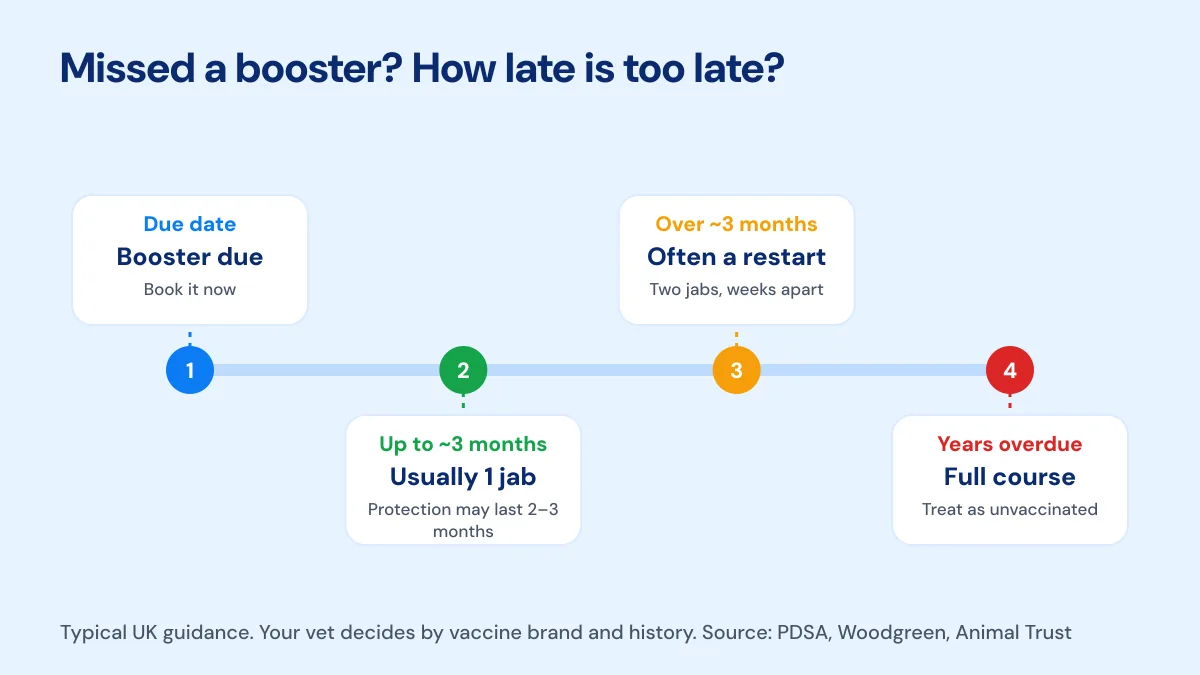
There is no single legal cut-off, but UK guidance is consistent. PDSA says a dog that misses a booster may stay protected for about 2–3 months after the due date before becoming at risk. Animal Trust, citing World Small Animal Veterinary Association guidance, describes a vaccination as lapsed when a booster is missed by more than three months. Woodgreen says very overdue dogs (over three months late) may need to start again from scratch, which means two doses.
| How late? | What usually happens | What to do now |
|---|---|---|
| Up to about 3 months | A single booster usually brings protection back up to date | Book the next available appointment |
| More than about 3 months | Often a restart: two injections a few weeks apart | Book now and ask about the second date |
| First booster missed after the puppy course | Practices differ; some allow a longer window off-licence | Ring your practice with the card details |
| Several years with no boosters | Restart course, as for an unvaccinated dog | Treat the dog as unprotected until the course is complete |
Some practices allow more flexibility in specific cases. The Royal Veterinary College's practice Q&A, for example, describes a window of up to six months (off-licence) when a dog is late for its first booster after a completed starter course. That is one practice's policy, which is why the phone call matters.
What to do today
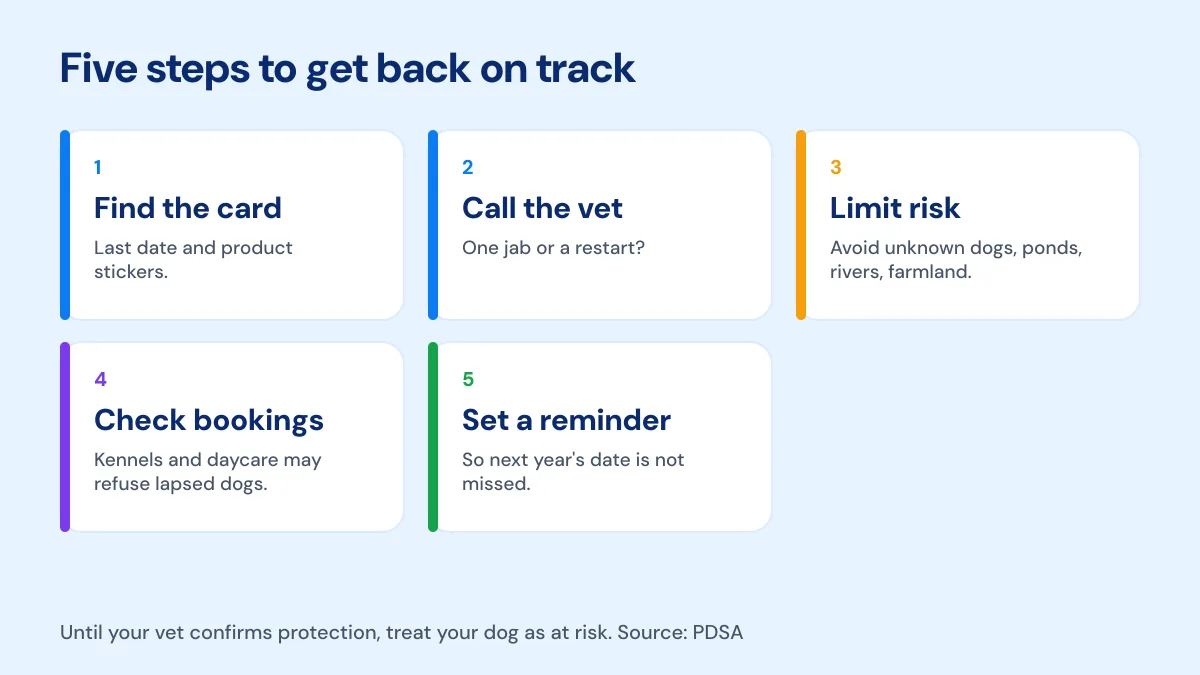
Find the card
Look for the last date and product stickers. If you cannot find it, your practice can usually look up its own records.
Ring the practice
Tell them the last booster date and ask whether one injection or a restart is needed.
Limit risk until protected
PDSA advises keeping the dog away from other dogs and from high-risk leptospirosis areas such as farm fields, ponds, stagnant water and rivers.
Check kennel and daycare bookings
Many kennels and daycares will not accept a dog whose vaccinations have lapsed, so check before a planned stay.
Set a reminder for next year
Write the next due date somewhere you will see it, or add it to a reminder app.
Why vets restart rather than give one late jab
Leptospirosis vaccines give the shortest protection, about a year. Once immunity has faded for several months, a single injection may not reliably bring it back, so vets start again with two doses to be sure. The core viral vaccines tend to last longer, which is one reason your vet may handle each component differently.
For the full picture of what is given each year, read dog booster vaccinations UK or return to the dog vaccinations UK guide.
Make sure it does not happen again
Most boosters are missed for ordinary reasons: a move, a new phone, a change of vet or a busy month. A reminder that does not depend on the practice's letter reaching you solves most of it.
Compare options in our pet vaccination reminder app guide.
Authoritative sources
Medical, regulatory and safety statements were checked against the following UK sources on 2026-11-23. Recheck changing regulations, travel rules, vaccination guidance and AI standards at least every 90 days or before a related decision.
Frequently asked questions
My dog's booster is two weeks late. Does it need to restart?
Usually not. PDSA says protection may last about 2–3 months past the due date, so a single booster is normally enough. Book it now and confirm with your practice.
How many injections does a restart involve?
Usually two injections a few weeks apart, like a puppy course. Your vet will set the exact interval for the product used.
Can I walk my dog while its vaccinations are overdue?
Short walks are usually fine if you avoid other dogs and high-risk leptospirosis areas such as ponds, rivers, stagnant water and farmland, but ask your vet for advice for your area.
Will my pet insurance cover a disease if vaccinations lapsed?
Many policies exclude illnesses that vaccination could have prevented if boosters were not kept up to date. Check your policy wording.
My rescue dog has no records. What now?
Treat it as unvaccinated until your vet says otherwise. Woodgreen advises that vets usually recommend a full two-dose course in this situation.