Key takeaways
- There is a booster visit every year, but the contents change from year to year.
- Leptospirosis: every year. Distemper, hepatitis and parvovirus: usually every three years.
- The first booster, about 12 months after the puppy course, completes the primary protection.
- Kennel cough can be added at the same visit or separately, depending on the vaccine and your vet.
- Bring the vaccination card: the brand and dates recorded there decide the next due date.
The typical three-year booster cycle
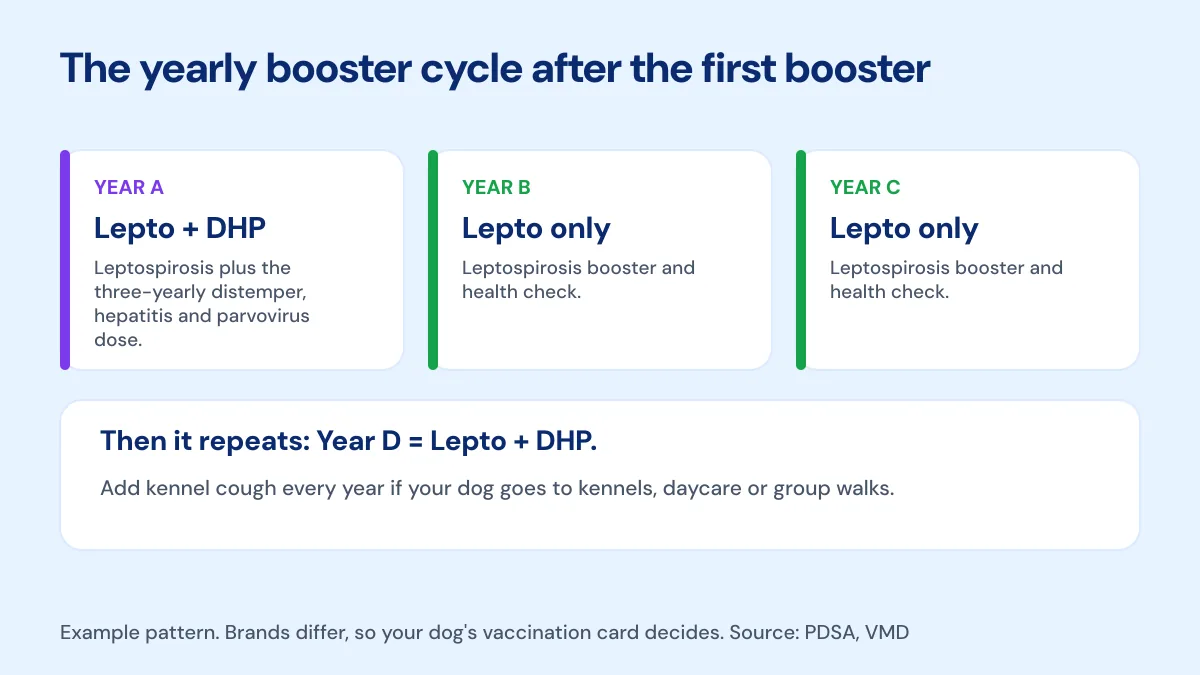
PDSA describes adult dogs needing a leptospirosis booster every year and a distemper, hepatitis and parvovirus booster every three years. The Veterinary Medicines Directorate (VMD) confirms that most UK-authorised core dog vaccines have a revaccination interval of at least three years. That is why you are invited every year, but your dog does not get every component every time.
| Year | Leptospirosis | Distemper, hepatitis, parvovirus (DHP) | Health check |
|---|---|---|---|
| Year A | Yes | Yes (three-yearly dose) | Yes |
| Year B | Yes | Not usually | Yes |
| Year C | Yes | Not usually | Yes |
| Year D | Yes | Yes (three-yearly dose) | Yes |
Why the first booster matters most
PDSA explains that protection from the puppy primary course lasts about a year. The first booster, roughly 12 months after the last puppy injection, is what turns that starter protection into long-term protection. Missing it by months is the most common reason dogs need a full restart.
Still in the puppy stage? Our puppy vaccination schedule UK guide covers the first injections and the first walk.
What happens at a booster appointment
Health check first
The vet checks weight, heart, teeth, eyes, ears, skin and joints. Vaccines should only be given to a healthy dog, so mention any recent illness.
Injection or nasal vaccine
Core vaccines are injected under the skin. The kennel cough vaccine is usually a quick squirt up the nose.
Record and next date
The vet records the product and batch in your dog's vaccination card and tells you the next due date.
Ask about the extras
It is a good time to ask about worming, flea and tick treatment, dental care and weight.
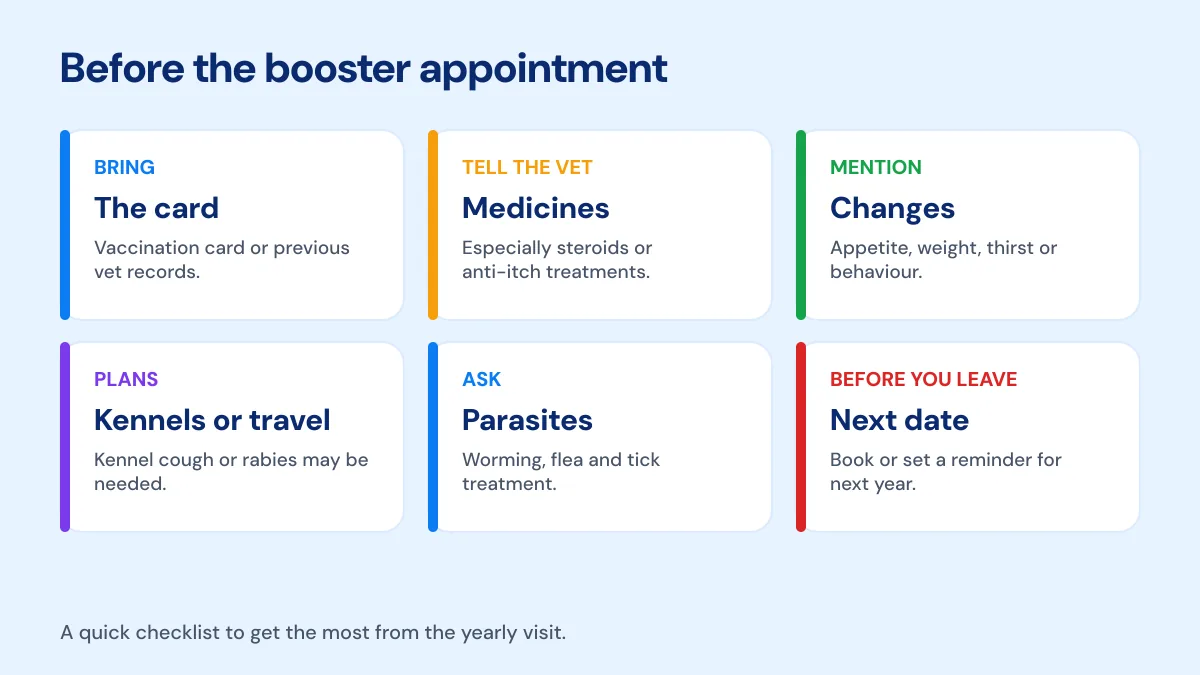
- Vaccination card or previous vet records
- List of medicines, especially steroids or anti-itch treatments
- Any changes in appetite, weight, drinking or behaviour
- Upcoming kennels, daycare or travel plans
- A treat for afterwards
- Your calendar, to book the next visit before you leave
After the booster
Most dogs carry on as normal. PDSA notes that mild effects such as tiredness, a slightly high temperature or a reduced appetite can occur and usually pass within 24–48 hours. Call your vet if your dog is very unwell, has facial swelling or breathing difficulty, or if mild signs last more than two days.
Back to the full dog vaccinations UK guide, or read about L2 vs L4 leptospirosis vaccines.
Authoritative sources
Medical, regulatory and safety statements were checked against the following UK sources on 2026-11-23. Recheck changing regulations, travel rules, vaccination guidance and AI standards at least every 90 days or before a related decision.
Frequently asked questions
Does my dog need a booster every year?
Yes, most dogs need a booster visit every year because leptospirosis protection lasts about 12 months. Distemper, hepatitis and parvovirus are usually only given every third year.
What is in a dog's annual booster?
Every year: leptospirosis. Every third year: distemper, hepatitis and parvovirus as well. Kennel cough can be added if your dog needs it. Your vet's records show exactly what was given.
Can my dog have the kennel cough vaccine at the same time as its booster?
Often yes, but it depends on the products your vet uses. Ask when you book.
Can I skip the booster if my dog is older?
Speak to your vet rather than skipping it. Leptospirosis and parvovirus remain risks for older dogs, and some vets offer blood tests (titre tests) to check immunity to the viral diseases.
How late can a booster be?
PDSA says a dog may stay protected for about 2–3 months after the due date. Beyond around three months your vet may recommend restarting the course. See our missed booster guide.