Key takeaways
- The checklist matters more than the age: vaccinated, microchipped and neutered, with your vet's agreement.
- Some vets say wait at least a week after the second jab, but PDSA notes full protection can take 3–4 weeks after the final injection.
- Neutering is generally recommended from around four months, and kittens can become pregnant from about four months.
- Microchip first: in England it is a legal requirement before 20 weeks and it is what reunites you with a lost cat.
- Ask your vet about flea, tick and worm protection before outdoor access.
- An indoor-only life is a valid choice if you provide play, climbing, scratching and safe window views.
The kitten outdoor readiness checklist
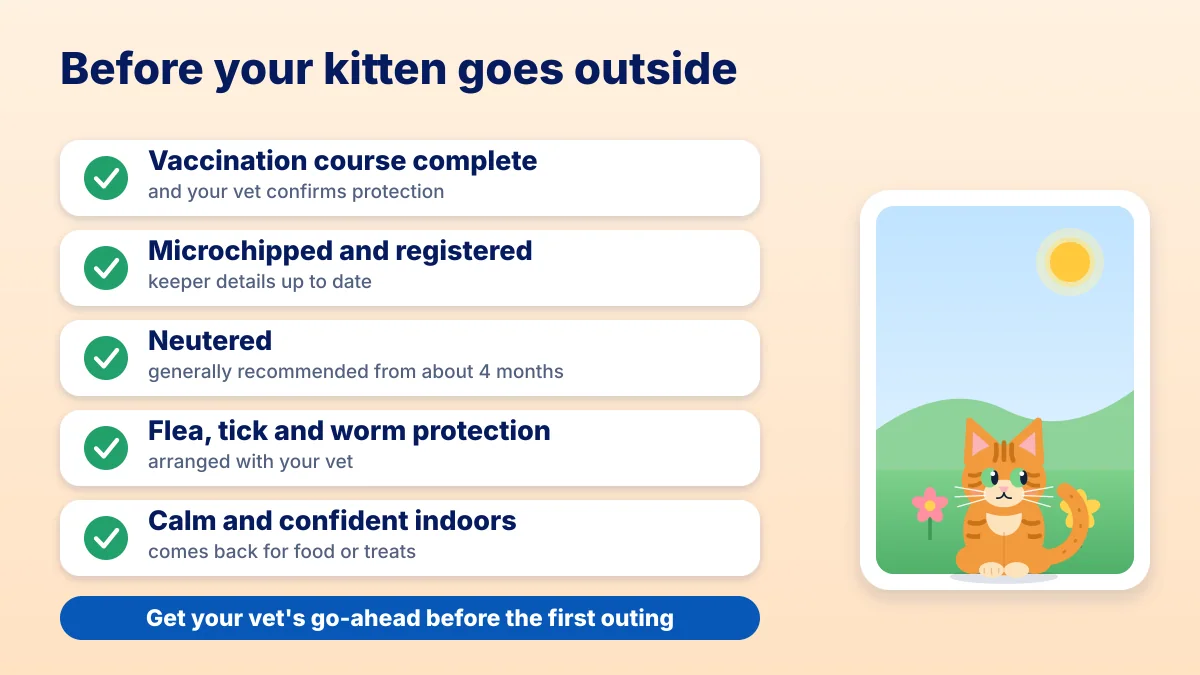
Battersea's Your Cat advice says a kitten should be neutered, microchipped and have completed its full course of vaccinations before going outside for the first time. PDSA's kitten checklist likewise says to make sure the kitten is fully vaccinated and neutered before it goes outdoors.
- Primary vaccination course completed and your vet has confirmed protection
- Microchipped, with details registered and kept up to date
- Neutered, with the vet's recovery advice followed
- Flea, tick and worm protection arranged with your vet
- Confident and relaxed indoors, coming when called or shaken treats
- Garden checked for gaps, hazards and toxic plants
How long after vaccinations can a kitten go out?
Opinions differ slightly because vaccine products differ. Medivet advises keeping a kitten inside until after the second vaccination and ideally for at least a week afterwards. PDSA says full protection starts 3 to 4 weeks after the final injection and advises keeping kittens indoors and away from outdoor cats until protected. Ask your vet for a specific date rather than assuming.
The full timeline is in our kitten vaccination schedule UK guide.
Microchip before the first outing
A microchip is how a lost cat is identified and returned. In England it is also a legal requirement before 20 weeks. Read the rules in our guide to cat microchipping law in the UK and make sure the keeper details are registered before any outdoor access.
Neuter before outdoor access
Cats Protection generally recommends neutering kittens at around four months, or younger, because kittens can reach sexual maturity and breed from four months. PDSA says neutering can be done from four months and notes it helps prevent unwanted litters, may reduce the risk of some cancers and can lower fighting between cats. Keep both males and females indoors until they have been neutered and your vet gives the go-ahead.
- Book neutering at your first or second vet visit so the date is not forgotten.
- Follow the vet's instructions for post-operative care and wait until they say your kitten has recovered.
- Ask whether the microchip can be implanted at the same appointment (if it has not been done already).
How to plan the first outings
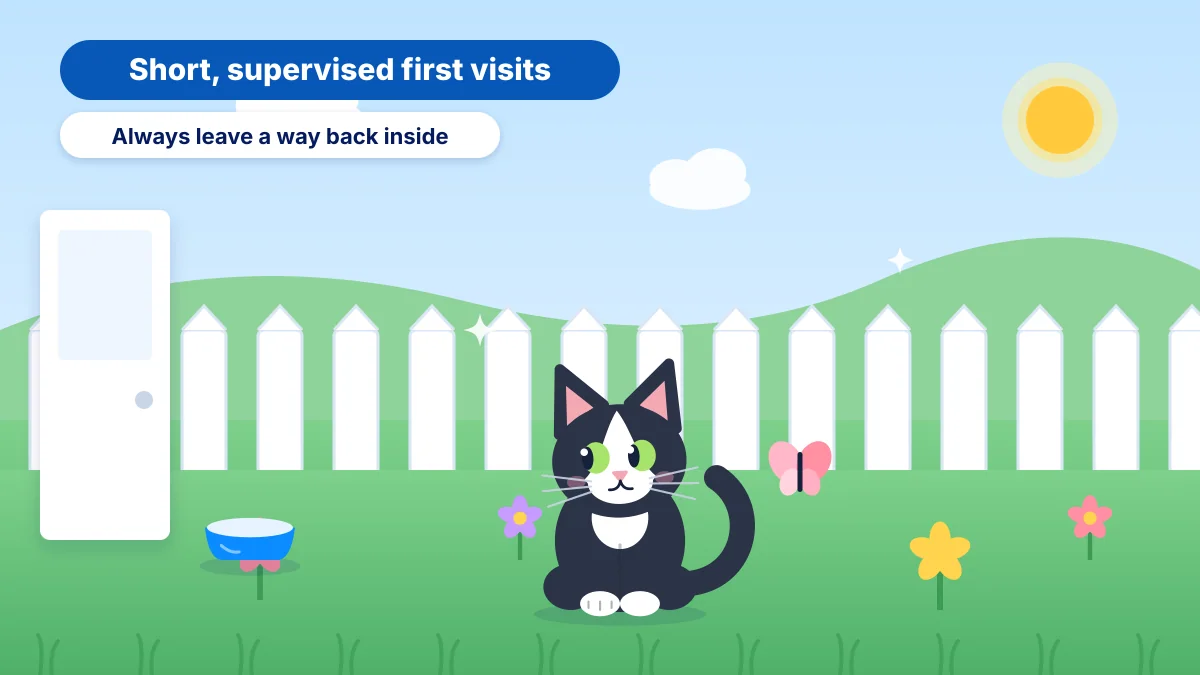
Once the checklist is complete, make the first trips short, calm and supervised. This is general practical advice rather than a vet-prescribed plan, so ask your vet if your kitten is nervous or has special needs.
Pick a quiet time
Choose a time when the garden is calm and other cats are unlikely to be around. Avoid dusk and busy periods.
Stay with your kitten
Sit nearby, let your kitten explore at its own pace and watch for signs of stress. Keep the first outings brief.
Keep the door open
Your kitten should always be able to come back inside. If you fit a cat flap, a microchip-reading model can keep other cats out.
Use food to call them in
Practice recall indoors first with a rattle of treats or the usual food bowl, then use the same cue outdoors.
Build up gradually
Extend the time and territory only as your kitten becomes confident.
Can a kitten stay indoors for life?
Yes, many cats live happily indoors if they have enough to do. Provide scratching posts, climbing space, window perches, hiding places and daily play. Indoor cats still need vaccinations, microchipping and regular vet care, as covered in our guide to kitten vaccinations. Return to the new kitten checklist for the other first-year milestones.
Track the dates that unlock outdoor access
Outdoor access depends on three dates: the vaccination date your vet confirms, the microchip registration and the neutering date. Add them to your kitten's pet profile in PetCare+ and note the vet's go-ahead so every household member works from the same information.
Authoritative sources
Medical, regulatory and safety statements were checked against the following UK sources on 2026-11-07. Recheck changing regulations, travel rules, vaccination guidance and AI standards at least every 90 days or before a related decision.
Frequently asked questions
When can kittens go outside in the UK?
When they have completed vaccinations and your vet confirms protection, they are microchipped and they have been neutered. In practice that is often around four to six months old.
Can my kitten go outside after the second vaccination?
Not automatically. Some vets say at least a week after the second injection and PDSA says full protection can take 3–4 weeks after the final dose. Your kitten should also be neutered and microchipped. Ask your vet for a date.
Can kittens go in the garden before their injections?
Not on their own. UK charities advise waiting until your kitten is vaccinated, microchipped and neutered before it goes outdoors. Until then, keep exploring indoors with window views and play, and ask your vet before any supervised garden visits.
Can an unneutered kitten go outside?
Vets and charities advise against it. Kittens can become pregnant from about four months, and neutering also reduces roaming and fighting.
Do kittens need flea and worm treatment before going outside?
Ask your vet to set up parasite protection suited to your kitten before it goes outdoors. Do not use dog products on cats.
What if my kitten gets lost?
A registered microchip is the best way to be reunited. Keep your details on the database up to date and contact local vets, rescues and neighbours quickly.