Key takeaways
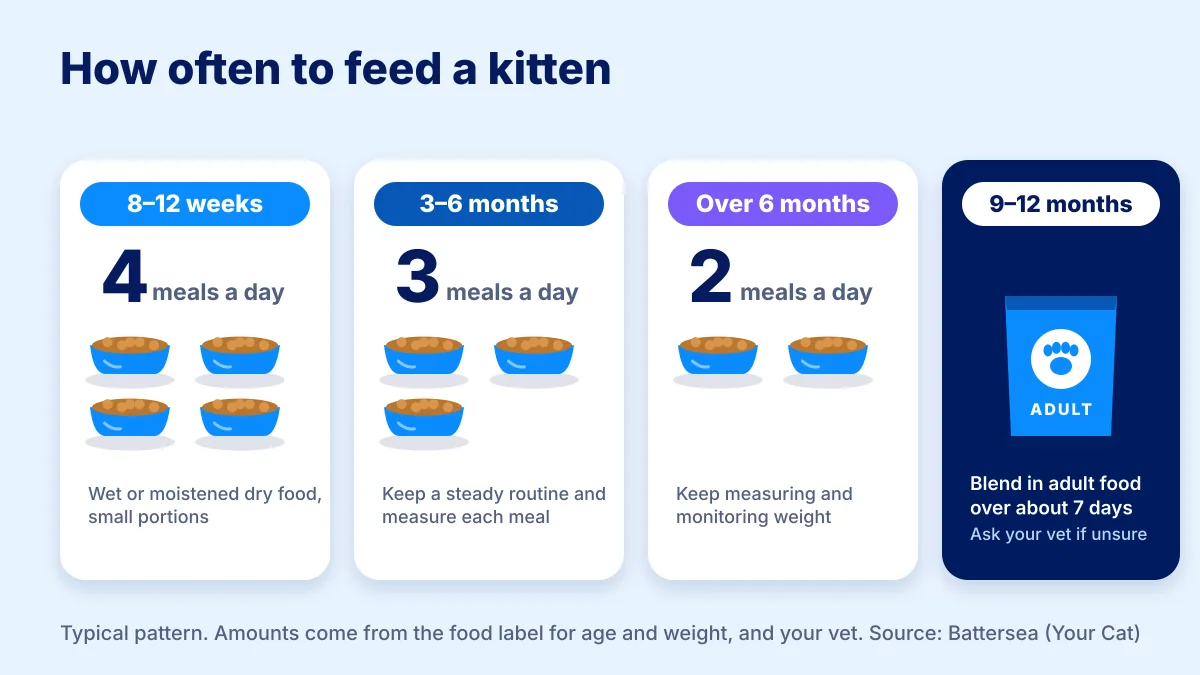
- Meal pattern: four meals a day at 8–12 weeks, three at 3–6 months and two over 6 months (Battersea).
- Portion sizes come from the food packaging for age and weight, not from a universal gram figure.
- Measure meals so everyone in the household feeds the same amount, which helps prevent weight gain.
- Start with the food the kitten ate before; any change should be gradual and after the kitten has settled.
- Choose a complete kitten formula. A 'complementary' label means it should be fed alongside other foods.
- Move to adult food around 9–12 months over about seven days. Ask your vet if you are unsure.
Kitten feeding schedule by age
Kittens have small stomachs and big energy needs, so they eat little and often. Battersea's veterinary guidance gives a clear pattern that most UK owners follow.
| Kitten age | Typical meals per day | Notes |
|---|---|---|
| 8–12 weeks | 4 | Wet food or moistened dry food in small portions |
| 3–6 months | 3 | Keep to a routine; measure each meal |
| Over 6 months | 2 | Keep measuring and monitor weight |
| Around 9–12 months | 2 | Move to adult food over about seven days; ask your vet if unsure |
How much should a kitten eat?
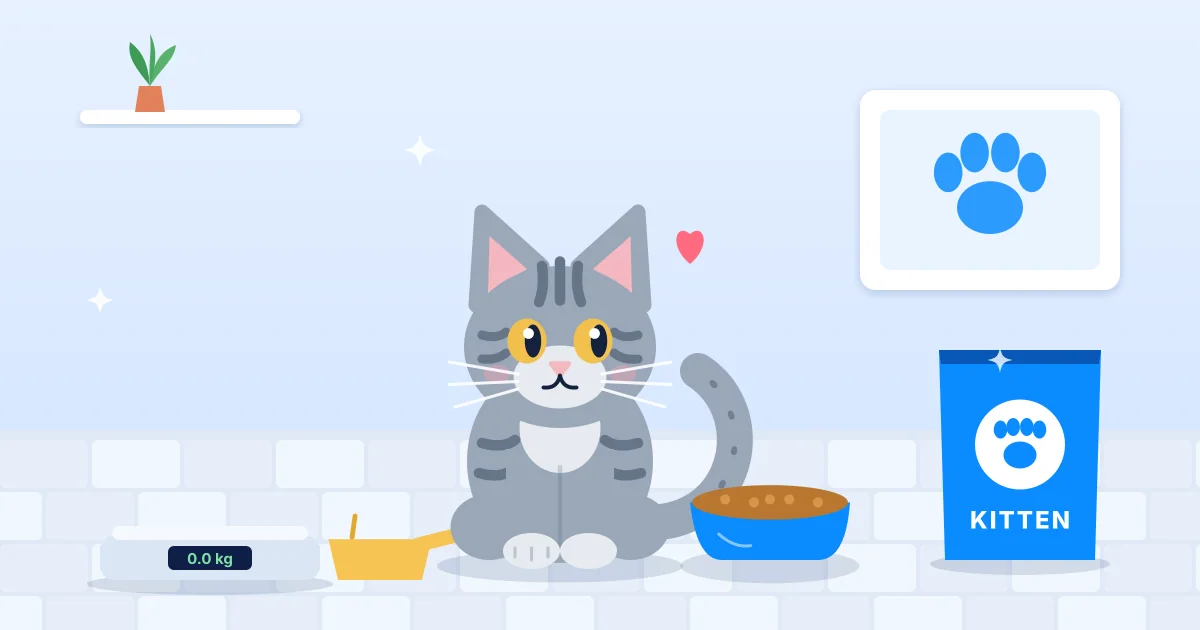
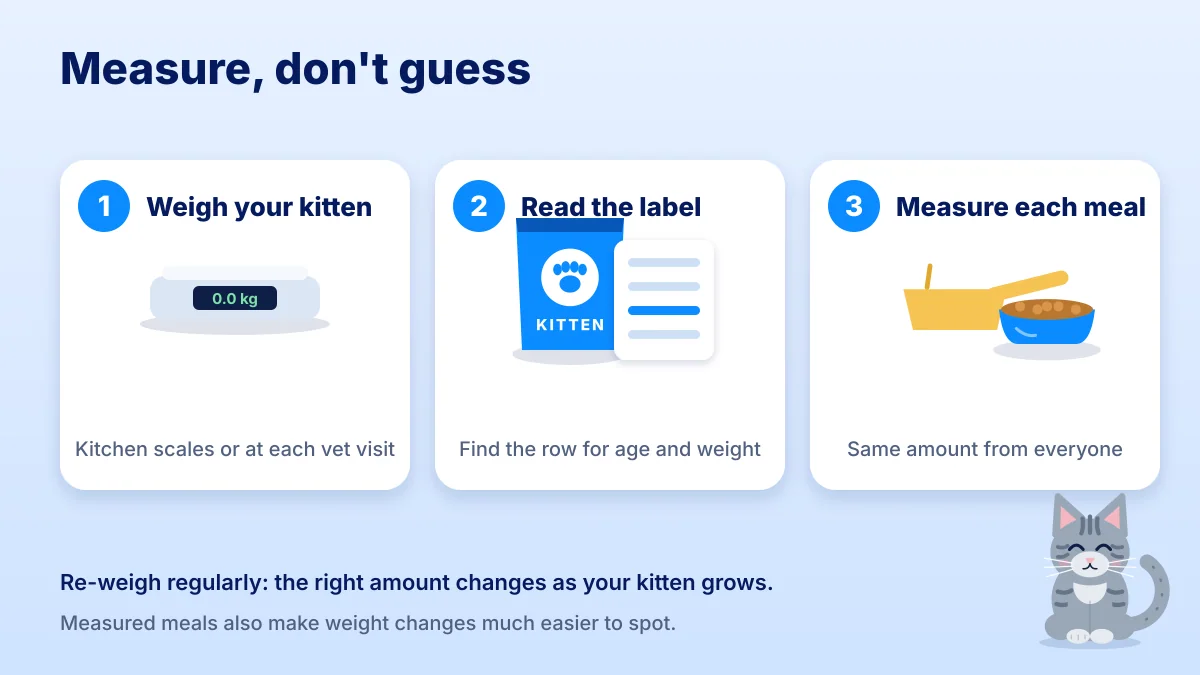
The answer is on the pack. Reputable kitten foods publish a feeding guide for age and weight, and amounts differ widely because foods differ in calories. Battersea advises following the packaging and measuring the food with a scoop. Measuring also keeps everyone in the household feeding the same amount, which helps prevent weight gain later in life.
1. Weigh your kitten
Use kitchen scales or a baby scale, or ask your vet practice to weigh your kitten at each visit.
2. Read the label
Find the row for your kitten's age and weight on the pack and note the daily amount.
3. Divide it into meals
Split the daily total across the number of meals for the kitten's age, measuring each one.
4. Check body condition
Ask your vet to show you how to check that you can feel the ribs under a light covering without seeing them, then adjust amounts if your vet advises.
Recheck weight regularly, because the right amount changes as your kitten grows.
What to feed: wet, dry and complete kitten food
Battersea notes that early meals are usually wet food or moistened dry kibble, that dry food supports dental health and that wet food adds fluid. Many owners offer both. What matters most is a complete kitten formula: a 'complementary' label means it should be fed with other foods rather than on its own.
- Start with the food your kitten was eating before collection. A sudden food change plus the stress of a move can upset the stomach.
- Once settled, change foods by mixing in the new one gradually over several days.
- Dry food can be left out for grazing if you are away for long periods, but measure the day's allowance.
- Store opened wet food in the fridge and serve it at room temperature. Keep dry food in an airtight container.
Water, milk and foods to avoid
Provide a couple of water bowls in different spots and clean and refill them daily, as Battersea suggests. Keep water and food away from the litter tray. Do not give cow's milk, because cats cannot digest lactose and it often causes diarrhoea. If you want to offer milk, choose one made for cats.
- Diarrhoea lasting longer than 24 hours deserves a call to your vet.
- Feed two kittens in separate bowls, some distance apart, to prevent food theft or bullying.
- Wait about an hour after a meal before energetic play.
- Ask your vet before offering any human foods or supplements.
When to switch to adult food
Battersea says to move to adult food at around 9 to 12 months, blending it in over seven days, and to ask your vet if you are unsure about the timing. Neutered cats can need fewer calories, so keep checking weight and ask your vet for personalised advice.
See the other key dates in our new kitten checklist, and note that neutering and vaccinations happen around the same period. Read our kitten vaccination schedule too.
Track weight and feeding notes
Write down the food, the daily amount and the weight at each vet visit. Sudden changes in appetite, drinking or weight are useful things to tell your vet. PetCare+ has health and care tools for weight, records and reminders, so you can see the pattern over time.
Authoritative sources
Medical, regulatory and safety statements were checked against the following UK sources on 2026-11-07. Recheck changing regulations, travel rules, vaccination guidance and AI standards at least every 90 days or before a related decision.
Frequently asked questions
How many times a day should I feed my kitten?
Battersea's vet guidance is four meals a day at 8–12 weeks, three at 3–6 months and two over six months.
How much should I feed my kitten in grams?
It depends on the food. Use the feeding guide on the pack for your kitten's age and weight, measure the portions and ask your vet if your kitten is gaining or losing weight too quickly.
Can kittens eat adult cat food?
Kitten food is made to support growth. Use a complete kitten formula until around 9–12 months, then move to adult food gradually.
Can I give my kitten cow's milk?
No. Cats cannot digest lactose and cow's milk often causes diarrhoea. Fresh water is the best drink, or use milk made for cats.
Should I leave food out all day?
Some owners leave measured dry food out for grazing, particularly if they are away for long periods. Whatever you choose, measure the daily allowance and monitor weight.