Key takeaways
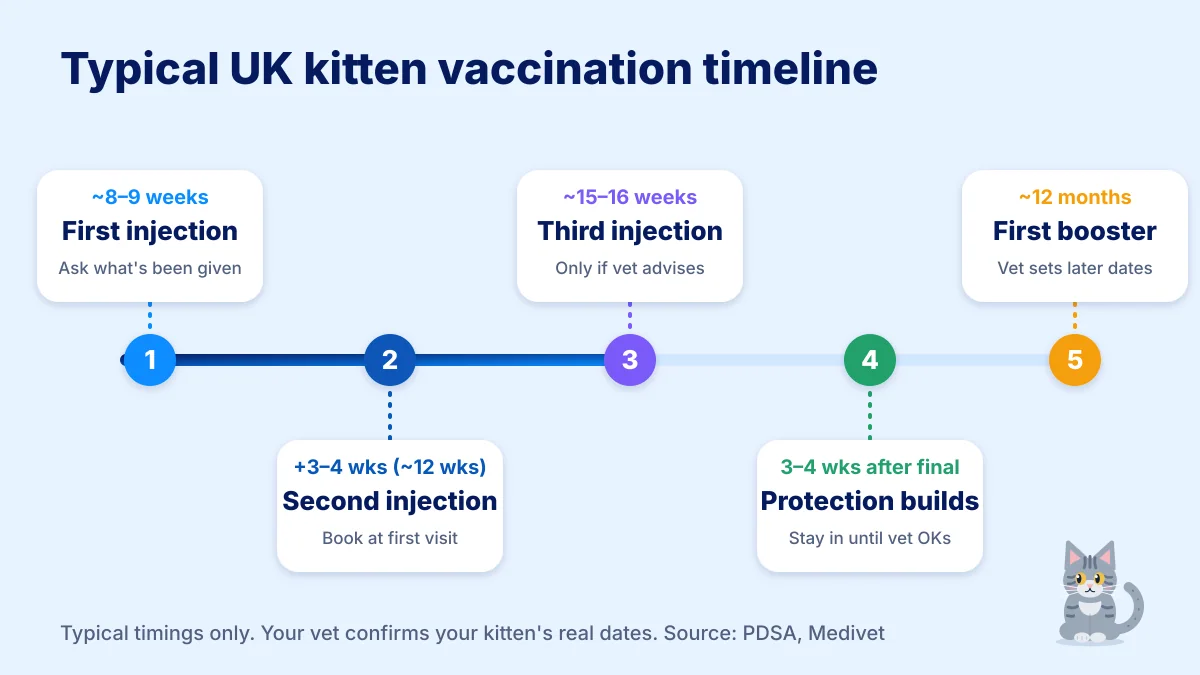
- Typical kitten course: two injections 3–4 weeks apart, often at about 9 and 12 weeks. Some kittens need a third at roughly 15 weeks.
- Cat flu and feline parvovirus vaccines are needed even by indoor cats because the viruses can arrive on clothing, shoes and surfaces.
- FeLV vaccination is mainly for cats that go outside, even only into the garden.
- Full protection takes time after the last injection: keep your kitten indoors until your vet says it is safe.
- The first booster is due about a year after the primary course; later boosters depend on the vaccine and your cat's risk.
- Keep the vaccination record with the product name and next due date, and add a reminder using your vet's dates.
Kitten vaccination schedule UK: the typical timeline
Charities and vets describe a similar pattern. PDSA says kittens usually get two injections 3 to 4 weeks apart, typically at 9 and 12 weeks old, and that some, but not all, need a third at about 15 weeks. Medivet describes a first vaccine at eight to nine weeks, a second at 12 weeks and, ideally, a third at 16 weeks to make sure maternal antibodies did not interfere. Practices differ, so treat the table as a guide and follow your vet's written plan.
| Stage | Typical timing | What to do |
|---|---|---|
| First injection | Around 8–9 weeks | Take the breeder or rescue paperwork and ask what has already been given |
| Second injection | 3–4 weeks after the first, often around 12 weeks | Book it at the first visit so the gap is right |
| Third injection (some kittens) | Around 15–16 weeks, only if your vet advises | Ask whether your kitten's vaccine product needs it |
| Protection builds | Not immediate. PDSA says full protection starts 3–4 weeks after the final injection | Keep your kitten indoors and away from outdoor cats until your vet confirms |
| First booster | About 12 months after the primary course | Add the date to your calendar once the vet confirms it |
| Later boosters | Every 1–3 years depending on the disease and vaccine | Ask for the next due date in writing each visit |
What do kitten vaccines protect against?
PDSA names the main UK cat vaccines as cat flu (feline herpesvirus and calicivirus), feline parvovirus (also called panleukopenia or infectious enteritis) and feline leukaemia virus.
- Cat flu: caused mainly by feline herpesvirus and feline calicivirus, affecting the eyes, nose and airways.
- Feline parvovirus (infectious enteritis): a highly contagious and often serious gut disease, particularly dangerous for young kittens.
- Feline leukaemia virus (FeLV): spreads through close contact between cats and suppresses the immune system. PDSA lists it for cats that go outside, even into a garden.
Read PDSA's cat and kitten vaccination guide for the charity's explanation of each disease and the boosters.
Do indoor kittens need vaccinations?
Yes. PDSA says indoor cats still need cat flu and panleukopenia vaccines because these viruses spread easily on clothing, shoes and surfaces. FeLV, which spreads mainly through close contact between cats, may not be needed for a cat that never meets other cats, but your vet will advise based on your kitten's lifestyle and any plans to let it outside.
Because an indoor-only kitten can change into an outdoor cat or move house, many owners ask the vet to explain the full FeLV decision at the first appointment.
What happens at the first vaccination appointment
The injection is usually combined with a health check and a chat about other kitten care. Medivet notes that the visit typically covers neutering, flea and worm protection, diet and behaviour. It is a good moment to ask about microchipping too, which is a legal requirement in England before 20 weeks.
- Bring the breeder or rescue paperwork and any vaccination card
- Bring the microchip number and the name of the database it is registered with
- Take a note of the food and the feeding routine
- Ask which diseases the vaccine covers and whether FeLV is advised
- Ask for the date of the second injection and the written plan
- Ask when it will be safe for your kitten to go outside
PDSA says side effects are uncommon. Mild effects such as a raised temperature, low energy or reduced appetite usually clear within 24 to 48 hours. Contact your vet promptly about anything that worries you, and report serious reactions straight away.
What if a vaccination is late or missed?
PDSA explains that in cats whose vaccines have been kept up to date, protection can last 2 to 3 months past the due date, but after that the cat is at risk again and may need to restart the primary course depending on how overdue the booster is. A kitten whose second injection is delayed is a different case, so call your vet rather than guessing.
- Contact the practice, show your existing records and ask for a safe plan.
- Keep your kitten indoors until the vet confirms protection.
- Stop other cats entering your home and wash your hands after contact with cats from outside.
- Do not repeat or replace a dose yourself.
Keep the record and set reminders
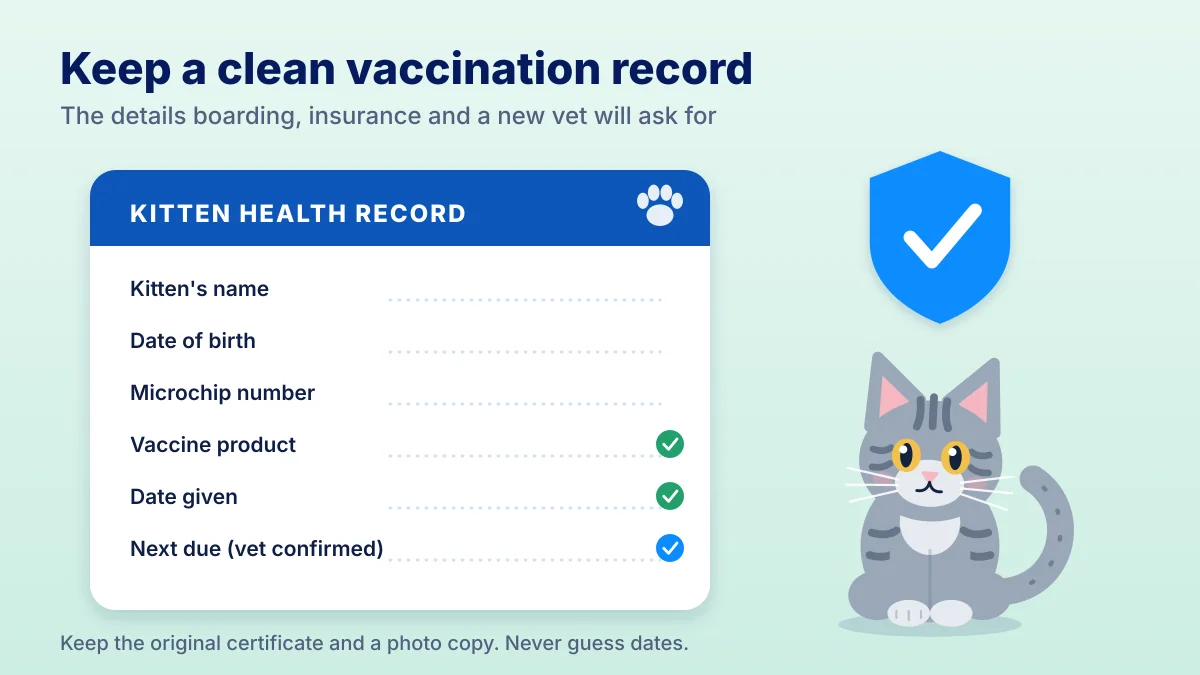
Keep the original certificate, then take a clear photo or file copy. Record the vaccine product, date, the practice and the next due date. PetCare+ lets you add health records and set care reminders in a pet profile, using whatever dates your vet confirms.
Compare reminder tools in our pet vaccination reminder app guide. Planning the next steps? Read when kittens can go outside and the new kitten checklist.
Authoritative sources
Medical, regulatory and safety statements were checked against the following UK sources on 2026-11-07. Recheck changing regulations, travel rules, vaccination guidance and AI standards at least every 90 days or before a related decision.
Frequently asked questions
At what age do kittens get their first vaccination in the UK?
Usually around 8–9 weeks, with the second injection 3–4 weeks later, often at about 12 weeks. Your vet confirms the exact dates after checking any previous vaccination.
Do kittens need a third vaccination?
Some do. PDSA says some kittens, but not all, need a third injection at about 15 weeks, and Medivet describes an ideal third dose at 16 weeks. Your vet decides based on the vaccine used.
How long after the second jab can my kitten go outside?
Some vets say at least a week after the second injection, but PDSA says full protection can take 3–4 weeks after the final injection. Your kitten also needs to be microchipped and neutered, so ask your vet for a go-ahead date.
Do indoor cats need vaccinations?
Yes, they need the cat flu and parvovirus vaccines. FeLV is mainly for cats that go outside or mix with other cats, and your vet will advise.
What if my kitten missed its second vaccination?
Call your vet with the records. Depending on the gap, the course may need to be repeated, which only a vet can decide.