Key takeaways
- Prepare one quiet room first: food, water, a litter tray, a bed, hiding places and a carrier come before any extras.
- Ask the breeder or rescue what the kitten eats, what vaccinations and treatments it has had and which microchip details exist.
- In England, owned cats must be microchipped before they reach 20 weeks and the keeper details kept up to date on an approved database.
- A typical kitten course is two vaccinations about three to four weeks apart; your vet confirms the real dates and whether a third is needed.
- Neutering is generally recommended from around four months, and kittens should stay indoors until vaccinated, microchipped and neutered.
- Write the dates down once: a dated record beats trying to remember a year of appointments.
Before you bring a kitten home: the decision checklist
A kitten is a 15-year-plus commitment, not a weekend of cuteness. PDSA's kitten checklist asks you to confirm that you can meet a kitten's welfare needs, budget for set-up and ongoing costs, and have a home that suits a cat, with quiet rooms and no pets likely to clash. It also points out that an adult cat can suit a busy lifestyle better than a kitten.
- Everyone in the household agrees to the kitten and the routine
- You have time for daily play, feeding, litter care and company
- You have found a local vet and asked about preventive treatment costs and care plans
- You have compared pet insurance quotes before the first vet bill arrives
- Other pets are considered, with a plan for slow introductions
- You know how to reach an emergency vet out of hours
Then ask the breeder or rescue the practical questions that shape your first fortnight: what food the kitten is eating, which vaccinations or treatments it has already had, whether it is microchipped and how the details will be transferred to you. PDSA advises keeping the same food and litter the breeder or rescue used, then switching gradually, so ask what they are using now.
The new kitten shopping checklist (UK)
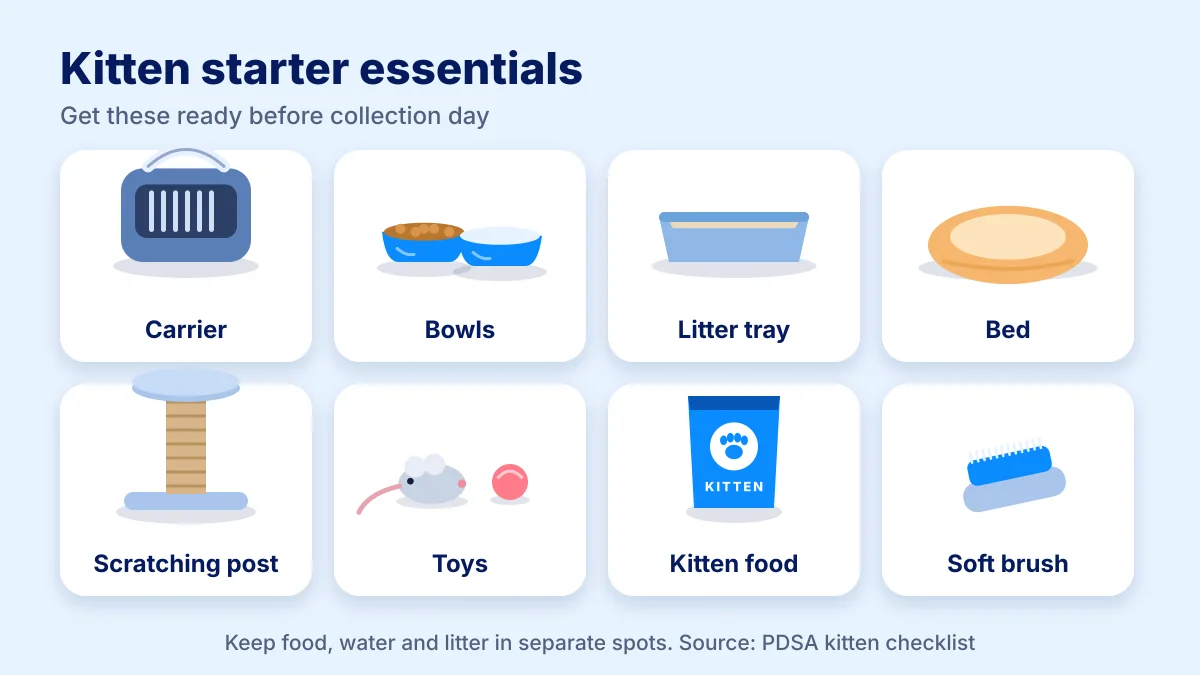
PDSA's list is a sensible baseline: beds, kitten food, food and water bowls, a puzzle feeder, litter trays and litter, toys, scratching posts or mats, a cat tree, a sturdy carrier (ideally hard-shelled with a top opening), a grooming brush or comb and blankets. Buy the essentials first and add extras after you have seen what your kitten actually uses.
- Complete kitten food (the same brand and type the kitten is eating now)
- Two or three heavy, shallow food and water bowls, kept away from the litter tray
- Litter tray plus the same litter the breeder or rescue used
- Hard-shelled carrier with a top opening for the journey home and vet visits
- Bed or cardboard box with a blanket that smells like home
- Scratching post or mat and a few simple toys
- Puzzle feeder or slow-feed bowl for later
- Soft brush or comb for gentle handling practice
- Cleaning products that are safe around cats
Kitten-proof your home before day one
Kittens explore with their mouths and paws. PDSA advises removing household hazards and poisons, or locking them away out of reach. Walk each room at kitten height and look for anything to chew, swallow, squeeze behind or climb.
- Secure windows, balcony doors and loose screens, and block gaps behind appliances.
- Tidy electric cables and put away string, ribbon, hair ties and sewing thread.
- Store human medicines, cleaning products, antifreeze and pesticides in closed cupboards.
- Check the washing machine and tumble dryer before every use.
- Keep lilies out of the house. Cats Protection lists lilies among the plants that are toxic to cats, so ask your vet or check the charity's list before buying houseplants or bouquets.
- Never use a dog flea product on a cat. Ask your vet which parasite treatments are suitable for kittens.
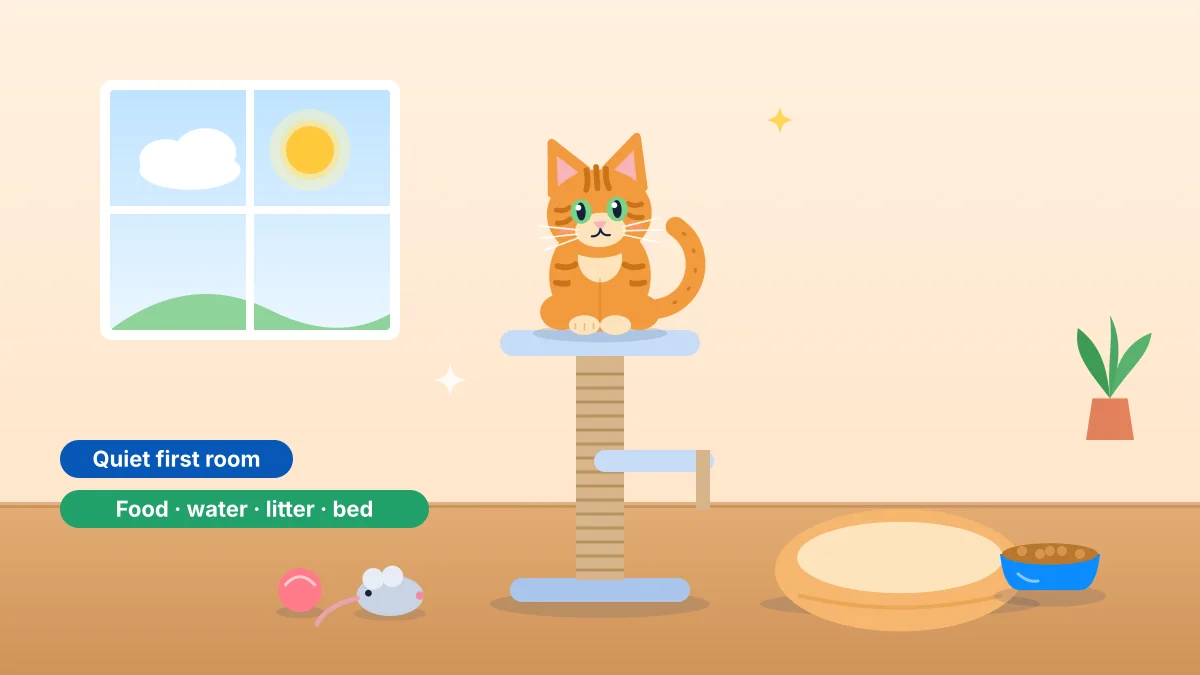
Choose a small first room such as a spare bedroom. PDSA suggests starting with just a few rooms and widening access as your kitten grows in confidence.
The first days and weeks at home
The first week is about safety and predictability. Bring your kitten home in the carrier, open it in the prepared room and let your kitten step out when ready. PDSA's advice is to let the kitten explore at its own pace, stay nearby but let it approach you, play regularly and allow rest when tired.
Day 1: quiet and small
Keep to one room with food, water, litter, a bed and a hiding place. Offer the food the kitten ate before and avoid crowds of visitors.
Days 2–7: routine
Feed at the same times each day, keep the same litter and add a blanket or towel that smells of the breeder or rescue so the new place feels more familiar.
Week 2 onwards: widen the world
Open one more room at a time. Short play sessions with a wand toy build confidence and burn energy. Keep handling gentle and brief.
Book the vet check
PDSA advises booking a vet check soon after arrival. Take the breeder or rescue paperwork, the microchip number and a list of questions.
When it is time to change foods, our guide to how much to feed a kitten explains the usual meal pattern and how to switch gradually.
The key health dates for a UK kitten
These are typical timings described by UK charities and vets. Your vet will confirm your own kitten's schedule, because vaccine products, previous treatment and health status all matter.
| Milestone | Typical UK timing | Read next |
|---|---|---|
| First vaccination | Usually around 8–9 weeks | Kitten vaccination schedule UK |
| Second vaccination | About 3–4 weeks after the first, typically around 12 weeks; some kittens need a third around 15 weeks | Kitten vaccination schedule UK |
| Microchip | Before 20 weeks old (legal requirement in England); often done at a vaccination or neutering visit | Cat microchipping law UK |
| Neutering | From around 4 months, as recommended by Cats Protection and PDSA | When can kittens go outside |
| First time outdoors | Only after vaccination protection, microchipping and neutering, and when your vet agrees | When can kittens go outside |
| First booster | About a year after the primary course | Kitten vaccination schedule UK |
| Switch to adult food | Around 9–12 months, blended in gradually | How much to feed a kitten |
Want the dates worked out for your own kitten? Enter a date of birth below to see the typical windows. It is a planning aid, not a veterinary schedule.
Interactive UK kitten date planner
Enter your kitten's date of birth, or an estimated age, to see the typical UK windows for vaccinations, microchipping, neutering and more. Nothing you type is stored or sent anywhere.
Enter a date or an age to see your kitten's typical timeline.
Each milestone has its own guide: vaccination schedule, cat microchipping law and when kittens can go outside.
Keep the paperwork and reminders in one place
A first-year kitten generates certificates, microchip numbers, appointment dates, food notes and weights. Paper certificates are essential originals, but a digital copy on your phone makes boarding, insurance and vet changes simpler. PetCare+ lets you create a pet profile with microchip details, store health records and add care tasks and reminders, using the dates your vet gives you.
If you are comparing ways to keep records, read our guides to pet vaccination reminder apps and pet health record apps in the UK.
Costs and insurance: what to budget for
Prices vary by region, vet practice, food choice and lifestyle, and they change, so a single headline figure would mislead. PDSA suggests asking your vet about preventive treatments, what they cost and whether the practice offers a care plan, and comparing insurance quotes to help with unexpected bills.
- Initial vet check, vaccinations and boosters
- Microchip and database registration (some vets include this in a package)
- Neutering
- Flea, tick and worm prevention chosen with your vet
- Complete kitten food, then adult food
- Litter and cleaning supplies
- Insurance premiums or an emergency fund
- Boarding or a cat sitter for holidays
Authoritative sources
Medical, regulatory and safety statements were checked against the following UK sources on 2026-11-07. Recheck changing regulations, travel rules, vaccination guidance and AI standards at least every 90 days or before a related decision.
Frequently asked questions
What do I need before bringing a kitten home in the UK?
At minimum: complete kitten food, bowls, a litter tray and litter, a bed, a sturdy carrier, a scratching post, toys and a kitten-proofed room. Register with a vet before collection and ask the breeder or rescue what the kitten currently eats.
Should a new kitten stay in one room at first?
Starting with a few rooms is PDSA's advice. A small, quiet first room lets the kitten learn where food, water, litter and a bed are, then you can widen access as confidence grows.
Do indoor kittens need vaccinations and a microchip?
Yes to both. PDSA says indoor cats still need cat flu and parvovirus (panleukopenia) vaccines, and in England the microchipping rule covers owned cats, including indoor cats, before 20 weeks.
How much does a new kitten cost in the UK?
It depends on the source of the kitten, where you live and the vet practice you use. List the costs in the budget checklist above, ask your vet for preventive-care costs and compare insurance quotes rather than relying on a generic figure.
What is the best food for a new kitten?
Choose a complete kitten food and begin with whichever the kitten was eating before arrival. Change foods gradually once your kitten has settled, and follow the feeding guide on the packaging.